Showing posts with label Dog Ears. Show all posts

Wednesday, December 17, 2008

The Joy of Talking Nonsense

I thought I was completely over my dogearing phase, but when I read p. 242 of the David McDuff translation of Dostoyevsky's Crime and Punishment two nights ago I just couldn't resist. I started reading the book a few weeks ago, prompted largely by the many worshipful references it got in James Wood's excellent How Fiction Works. That, and the fact that I'd never read any Dostoyevsky and felt I was overdue.


Anyway, the book had been kinda slow going the first couple hundred pages, with the notable exception of the visceral description of the titular "crime" (which I will not spoil for those of you who haven't read the book yet). It has really been picking up of late, and it suddenly exploded incandescently (for me) during this monologue by Razumikhin. To set the stage a bit, Razumikhin (a friend of the protag Raskolnikov) had been drinking "a terrible quantity of vodka" until he was called into service to escort the recently arrived mother and sister of Raskolnikov to their lodgings. In his foggy state, he becomes instantly smitten with the beautiful women and starts passionately running off at the mouth...

'What do you suppose?' Razumikhin shouted, raising his voice even louder. 'Do you suppose I'm going on like this because they talk nonsense? Rubbish! I like it when they talk nonsense! Talking nonsense is the sole privilege mankind possesses over other organisms. It's by talking nonsense that one gets to the truth! I talk nonsense, therefore I'm human. Not one single truth has ever been arrived at without people first having talked a dozen reams of nonsense, even ten dozen reams of it, and that's an honourable thing in its own way; well, but we can't even talk nonsense with our own brains! Talk nonsense to me, by all means, but do it with your own brain, and I shall love you for it. To talk nonsense in one's own way is almost better than to talk a truth that's someone else's; in the first instance you behave like a human being, while in the second you are merely being a parrot! The truth won't go away, but life can be knocked on the head and done in. I can think of some examples. Well, and what's our position now? We're all of us, every one of us without exception, when it comes to the fields of learning, development, thought, invention, ideals, ambition, liberalism, reason, experience, and every, every, every other field you can think of, in the very lowest preparatory form of the gymnasium! We've got accustomed to making do with other people's intelligence – we're soaked in it! It's true, isn't it? Isn't what I'm saying true?' cried Razumikhin, trembling all over and squeezing the hands of both ladies. 'Isn't it?'

Methinks it is.

Monday, July 7, 2008

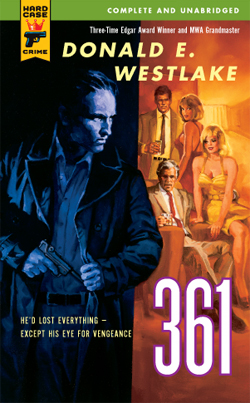
Dog Ears #16: 361

For a while, Dog Ears #16 was going to be H.P. Lovecraft's The Call of Cthulhu and Other Weird Stories, but I was unable to even read half of the Lovecraft collection. It seemed like a natural follow-up to Screaming Mimi, as Lovecraft was discovered in pulp horror magazines like Weird Tales and only later gained literary respect.

Ah, to be able to read with 11-year-old eyes again...

I found him painfully gothic, too overblown and repetitive and not creepy enough, although he certainly had his moments of inspired gruesomeness. Maybe his work has been plundered by later-20th century masters of the supernatural like Rod Serling and Stephen King to the point where it seems retroactively trite.

From the Introduction, p.xix

At its best Lovecraft's work becomes a kind of incantation, seducing the mind into a momentary acceptance of the fantastic incidents being related. At its worst it becomes pompous and bombastic.

Too often I sided with the latter, and the book was shelved before I could even finish the titular story Cthulhu. Maybe I need to revisit the 1985 Lovecraft adaptation RE-ANIMATOR, which I remember being disgusting in all the best ways when I saw it in high school.

Title is taken from Roget's Thesaurus's numbered entry for "Killing"

Anyway, when I ditched Cthulhu I had three newly ordered Hard Case Crime paperbacks to choose from so I picked Don Westlake's 361 and dove in. 361 really hit the spot. I can't articulate why, but sometimes there's nothing like the cathartic violence in a bleak tale of revenge to make you feel a touch more alive.

I was lucky enough to meet Don Westlake (who in addition to a celebrated career as a novelist was Oscar nominated for writing THE GRIFTERS) last December at a holiday party in Ancram, NY. I was introduced and asked him a few questions about writing, mostly about the great POINT BLANK (1967) which was based on his book The Hunter (written under the pseudonym Richard Stark). Westlake recounted how the film's star Lee Marvin was in a terrible place personally during the shoot, still apparently affected by the trauma of serving as a sniper in the Marines in WWII and fighting in the Pacific. He also remarked that, as is true with most writers being adapted, he didn't have much to do with the film's production at all. He was very gracious to me and I walked away with the buzz you feel when you meet a legend.

"I bet you're a big Lee Marvin fan, aren't ya?"

Here are some choice excerpts from 361, originally published in 1962 and re-released in 2005 after being out of print for over 40 years.

p37 hang fire phrase
delay or be delayed in taking action or progressing.

p42 "I got the eye from the dresser and went into the head. I washed my face and watched myself put the eye in."
- the protag Ray loses his eye early on and has to get used to a glass eye. I don't know if his wordplay here is deliberate or not, but I got a good chuckle.

p59 "Linda, the little girl, came over and started asking stupid questions. She was like her mother, interesting until she opened her mouth."

p129-30 "To begin with, every man has to have either a home or a purpose. Do you see that? Either a place to be or something to do. Without one or the other, a man goes nuts. Or he loses his manhood, like a hobo. Or he drinks or kills himself or something else. It doesn't matter, it's just that everybody has to have one or the other."

p140-41 "Aren't you gonna help him out of the water?"
"No, I wasn't playing. I don't play."
- I love that people were saying "I don't play" 45 years ago!

p173 "William Cheever's name was fourth of four on the frosted glass panel of the door. It wasn't a law firm, it was one of those set-ups where a number of unsuccessful professional men get together to share the rent and the receptionist and the futility."

p203 "I went into the first bar I came to on Lexington Avenue, but it was lunchtime and full of bland smooth people."


BONUS DOGEARS from The Call of Cthulhu and Other Weird Stories

p9 cenotaph |ˈsenəˌtaf|
noun
a tomblike monument to someone buried elsewhere, esp. one commemorating people who died in a war.

p16 mésalliancemāzəˈəns; ˌmāˌzalˈ n s|
noun
a marriage with a person thought to be unsuitable or of a lower social position.

p24 (from the story Celephaïs)
"There are not many persons who know what wonders are opened to them in the stories and visions of their youth; for when as children we listen and dream, we think but half-formed thoughts, and when as men we try and remember, we are dulled and prosaic with the poison of life."

Monday, June 9, 2008

Dog Ears #15: The Screaming Mimi

Summertime is time for "beach reading", so I picked a book from my list that I hoped had no redeeming qualities other than sheer entertainment. Fredric Brown's 1949 pulp The Screaming Mimi hit the nail luridly on the head.

Not to be confused with the NYC vintage store"Screaming Mimi's"

Fellow Cincinnatian Brown's book has been adapted for film at least twice, first in 1958's SCREAMING MIMI (starring legendary looker Anita Ekberg as the stripper Yolanda) and then as the uncredited inspiration for Dario Argento's 1970 shocker THE BIRD WITH THE CRYSTAL PLUMAGE. Particularly for a book almost 60 years old, Mimi's world of smart-ass narrators, hard-drinking beat reporters, sleazy underworld figures and psycho killers feels gritty and authentic (even during its many flights of fancy).

The writing is hard-boiled and often hilarious, and if I were still angling to produce movies I would go off to a motel in the desert, pound out another adaptation of this sucker and get it to Brad and Angelina ASAP. They would be perfect as binging Bill Sweeney and his curvy obsession Yolanda (which reminds me, the tagline for the 1958 MIMI was "Suspense around every curve!", which is pretty damn good methinks).

Starring Anita "La Dolce Vita" Ekberg (aka Anita "Va-va-voom" Ekberg)

If you decide to do that, please thank me in the credits.

p1 (the first lines of the book)
"You can never tell what a drunken Irishman will do. You can make a flying guess; you can make a lot of flying guesses."

"There's murder before the story proper starts, and murder after it ends; the actual story begins with a naked woman and ends with one, which is a good opening and a good ending, but everything between isn't nice. Don't say I didn't warn you."

p6 crease |krēs| verb [ trans. ]
2 (of a bullet) graze (someone or something), causing little damage : a bullet creased his thigh.

p10 "It's the easiest thing in the world, Sweeney. Take rich men. Easiest thing in the world; anybody can get rich. All you got to do is want money so bad it means more to you than anything else. Concentrate on money and you'll get it. If you want other things worse, you don't."

p20 "There are strange things in the world and then there are stranger ones."

There are strange films in the world, and then there are Dario Argento films.

p22 "Sweeney headed for the Blade. There's a nice pun in that, if you don't mind your puns obvious. The Blade. If you saw that pun yourself, forgive me for pointing it out. You got it, yes, but somebody else would have missed it. It takes all kinds of people to read a book."

p30 "'Well,' said Sweeney, and thought it over. He had to get some nourishment into him somehow, a little at a time, until his appetite came back and he could look at a full meal without flinching. 'Beer with an egg in it, I guess.'"

nictitating membrane |ˈniktiˌtāti ng |
noun Zoology
a whitish or translucent membrane that forms an inner eyelid in birds, reptiles, and some mammals. It can be drawn across the eye to protect it from dust and keep it moist. Also called third eyelid .

p32 "Isn't civilization a marvelous thing, Mr. Sweeney? That two men can sit around like this and insult one another, amicably but sincerely, and enjoy the conversation?"

p111 "He... knocked on a heavy door. It opened a few inches and a face looked out, the eyes–and they weren't nice eyes–well above the level of Sweeney's head. Under the eyes was a broken nose, and under the nose was a pair of thick lips that said "Yeah?" and showed broken teeth between them."

complaisant |kəmˈplāsənt|
adjective
willing to please others; obliging; agreeable : when unharnessed, Northern dogs are peaceful and complaisant.

p118 "Unconsciously, one judges others by comparison with oneself; and two people both of whom have eaten onions cannot smell each other's breath."

151 goldbrick informal
noun
a thing that looks valuable, but is in fact worthless.
• (also goldbrick or goldbricker) a con man.
• a lazy person : [as adj. ] hardworking Amos and goldbrick Andy.
verb (usu. goldbrick) [ intrans. ]
invent excuses to avoid a task; shirk : he wasn't goldbricking; he was really sick.
• [ trans. ] swindle (someone).

156 "He strolled over to Clark Street, stopped in at Ireland's and ordered a lobster."
- i don't know what it is about that sentence, but there's something magical and transporting about it for me...

Finally, a bonus Dog Ear that I found at Brown's IMDB page. Brown is credited with writing the shortest horror story of all time:

"The last man on earth sat alone in a room. There was a knock at the door."

Wednesday, May 7, 2008

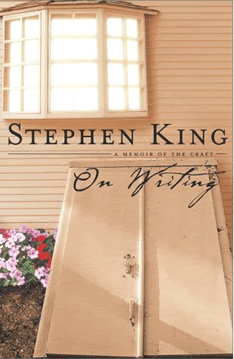
Dog Ears #14: On Writing

I'd planned to take a break from Dog Ear-ing for a while, and had skipped the last book I read (Chip Kidd's The Learners- good, but not great). The next book on my stack was Stephen King's nonfiction On Writing: A Memoir of the Craft, a book I'd picked from an assortment of giveaways in the basement of AB and UM over the holidays. When I began I wasn't planning on Dog Ear-ing it either, but there were just too many plums I couldn't resist picking... et voila.

It's always a pleasure when Mr. King leads you down into the cellar

Including On Writing I've now read 22 books written by King, far and away the largest number by any one author. In scanning his chronological bibliography, I also realized that I hadn't read any King since 1997's Wizard and Glass, the fourth installment of the frustratingly ambitious Dark Tower series. I'm not sure why I stopped reading King for so long, but my best guess is that he was just so damn prolific that I stopped trying to keep up and, kind of like a favorite band you veer away from after years of faithful devotion, I realized that I needed a break.

Even though On Writing is nonfiction, it's written in King's instantly recognizable voice, and I realized how much I'd missed it after such a long break. The book's more or less broken up into three sections- King's own personal history and evolution as a writer, his advice on how to manage the art and craft of writing itself, and finally a harrowing chapter on his near-fatal encounter with a

BLOGGER'S NOTE

Above, I stopped writing mid-sentence when Mrs. Word Player walked in the door. We decided to go out and grab some lunch, so I walked away from the computer and this post. What I had been about to write was that King, as a pedestrian, was struck by a car in a horrible accident near his home in the middle of writing On Writing, and didn't finish it for months.

In true, eerie King fashion, we got in the car to drive to lunch today and got in a car accident in an intersection not far from our home. We were both shaken up but uninjured and the other driver (also uninjured) was clearly at fault. As I was driving the rental car home after dropping our car off to get fixed the weird synchronicity struck me, and oddly made me feel a little better about the whole thing. At least no one had to be evacuated by helicopter for emergency surgery...

Fortunately, the other driver didn't hiss "Thinner!" at me while exchanging insurance information

That said, I'm a touch freaked out.

Anyway, here are some of the best Dog Ears from On Writing.

p37 "Let's get one thing clear right now, shall we? There is no Idea Dump, no Story Central, no Island of the Buried Bestsellers; good story ideas seem to come quite literally from nowhere, sailing at you right out of the empty sky: two previously unrelated ideas come together and make something new under the sun. Your job isn't to find these ideas but to recognize them when they show up."

p163 "... stories are found things, like fossils in the ground. ... Stories aren't souvenir tee-shirts or GameBoys. Stories are relics, part of an undiscovered pre-existing world. The writer's job is to use the tools in his or her toolbox to get as much of each one out of the ground intact as possible."

p249 logrolling: |ˈlôgˌrōli ng; ˈläg-|
noun
1 informal the practice of exchanging favors, esp. in politics by reciprocal voting for each other's proposed legislation. [ORIGIN: from the phrase you roll my log and I'll roll yours.]
2 a sport in which two contestants stand on a floating log and try to knock each other off by spinning it with their feet.

The boy that launched a million nightmares

Well, it seems that after I cut a few DE's that didn't seem as compelling as I thought they were laying in bed, this installment is a little thin. Let's insert the two DE's I couldn't resist making in The Learners to beef the piece up, yes?

p160 "'Lars once said there are two kinds of people in this world: those who believe there are two kinds of people in this world and everyone else.'"

p175. "Miss Preech: 'Your five o'clock is here. The respondent to the shoe ad. A Mr. Harshbarger.'
'Send him up.' Tip rubbed his hands listlessly. 'Oh, I'm just filled with antisappointment.'
'Pardon?'
'Antisappointment. Anticipation colliding head-on with the certainty of its own doom."

I think we've all experienced our fair share of antisappointment, yes?

One final note- tomorrow is the one year anniversary of this blog. Feel free to take the day off from work and celebrate with me. To borrow once more from Stephen King, thank you Faithful Reader.

Sunday, April 6, 2008

Dog Ears #13: On the Good Life

I had only a faint remembrance of Cicero from my collegiate Political Science syllabus when I read a brief (but funny) passage devoted to knocking him down a peg in Huysman's Against Nature. That book's protag Des Esseintes delighted in calling Cicero "Chick-Pea" (the Latin translation of "Cicero") as he ripped him for his "long-winded style, the redundant metaphors and the rambling digressions" (p28) and much more.

After assassinating Julius Caesar, Brutus asked Cicero "to restore the Republic"

After reading a collection of Cicero's works from the 50s and 40s BC entitled On the Good Life, I'm happy to disagree with Des Esseintes. OK, Cicero was indeed a bit long-winded, but his insights into the core issues of life as he knew it (particularly one's relationships with other people and one's relationship with oneself) are remarkably, even incredibly, spot-on, relevant and and invaluable over 2000 years later.

Rather than fumble around for my own thumbnail description of who Cicero was, allow me to paste from Wikipedia:

Marcus Tullius Cicero (Classical Latin pronounced [ˈkikeroː], usually pronounced /ˈsɪsəroʊ/ in English; January 3, 106 BC – December 7, 43 BC) was a Roman statesman, lawyer, political theorist, and philosopher. Cicero is widely considered one of Rome's greatest orators and prose stylists.
Cicero is generally seen as one of the most versatile minds of Roman culture and his writing the paragon of Classical Latin. He introduced the Romans to the chief schools of Greek philosophy and created a Latin philosophical vocabulary. An impressive orator and successful lawyer, Cicero probably thought his political career his most important achievement. However, today he is appreciated primarily for his humanism and philosophical and political writings.

Yes, that was the right call.

There was just something mesmerizing about the title of this book, and even though I've been looking forward to some "Summer Reading"-type books, I knew I had to see if Cicero knew something about the elusive "Good Life" that I didn't know.

He did. He was plagued by many of the same vexations, frustrations and doubts that I am (and millions upon millions of others too, I'd venture). He placed a much higher premium on friendship than most thinkers I've come across, and as someone who has extremely strong feelings about the successes and failures I've experienced in friendships of my own, I was on the edge of my seat for nearly the whole book.

I highly recommend this book to those of you who often feel betrayed by the depth (or lack thereof) of modern interpersonal relationships and seek the ability to see others more clearly for who they are (and, the real trick, who they will be). This was by far my most dog-eared book to date...

Before his execution, Cicero's last words were said to be "do try to kill me properly"


From "Introduction"

p21 "In converting Classical Greek philosophy into Latin, Cicero "had to create new words. We owe him the terms quality, individual, vacuum, moral, property, induction, element, definition, difference, notion, comprehension, infinity, appetite, instance, science, image, species."

- damn!


p37 "Petrarch also welcomed (Cicero) as the spokesman for civilized, active leisure, and, in his essay On the Solitary Life and elsewhere, quoted him in order to show that the highest aim of leisure is to be busy."

p43 "Cicero's ideals do not dwell in Utopias, but in the real world. His treatises are for people who possess mature and independent minds, who have no desire to follow other minds slavishly, and who are compelled, in the course of their daily existences, to grapple with problems which are complex – rarely admitting of a purely intellectual solution – and which call on all the resources of their humanity."


From "Discussions at Tusculum"

p61 "If, therefore, there exists any man who is capable of regarding all the hazards and accidents of fortune and human life as endurable, a man moreover who is troubled neither by fear nor by distress nor by passion, a man of whom all empty pleasures of whatever kind leave utterly cold – then, if such a person exists, there is every reason why he should be happy."

p86 "For Dionysius was...a tragic poet (how good he may have been is beside the point, for in that art, more than any other, everyone seems entirely satisfied with his own efforts: I have never known a poet – and Aquinas was a friend of mine – who was not absolutely first class in his own eyes: that is how it is: you like your work, I like mine)."

- I think that observation holds true for more pursuits than poetry...


p88 "An acute first-class brain is the finest asset anyone can have – and, if we want to be happy, it is an asset we must exploit to the uttermost."

p104 "And what the contrast demonstrates is that the true satisfaction to be derived from food comes not from repletion, but from appetite – the people who run hardest after pleasure are the least likely to catch what they are after."


From "On Duties"

p122 "If we are trying to achieve mental enjoyment, for example, or relief from trouble, the findings of philosophy are of incomparable value, because the people who practise this study are perpetually searching for the things that produce a good and happy life."


From "On Friendship"

p181 (in discussing the recent death of his great friend Scipio)
"For I do not believe Scipio himself has suffered a misfortune. If anyone has suffered a misfortune, it is myself. But if you let your sorrows at such a happening overwhelm you, this shows how much you love, not your friend, but yourself."

p188 "Friendship, then, both adds a brighter glow to prosperity and relieves adversity by dividing and sharing the burden. And another of its very many remarkable advantages is this. It is unique because of the bright rays of hope it projects into the future: it never allows the spirit to falter or fall. When a man thinks of a true friend, he is looking at himself in the mirror. Even when a friend is absent, he is present all the same."

p193 "When a man shows kindness and generosity, his motive in doing so is not just to exact repayment. We do not hire out our favors, and charge interest for them: we behave kindly because that is the natural thing to do. The reason why we count friendship as a blessing is not because we are hoping for a material return. It is because the union is quite enough profit in itself."

p204 "If people whose lives are just constant wallowings in self-indulgence want to discuss friendship, let us not pay them the slightest attention. They do not understand the subject, either in practice or theory."

p208 "The friends we select ought to be sound and stable and reliable. But such people are distinctly scarce, and, besides, it is extremely difficult to pick them except by practical experience: and the problem is that this experience can only be acquired after the friendship has actually begun. That is to say, the friendship comes first and the material for estimating its desirability only becomes accessible later on; it is impossible to try one's friend out in advance."

- which is really too bad, don't you think?

p213 "Friendships formed before one grows up cannot possibly be stable or permanent. For young people's personalities change, and their tastes change with them – and altered tastes are what bring friendships to an end."

Cicero in younger, happier times...

From "The Dream of Scipio"

p 352 "Instead let Virtue herself, by her own unaided allurements, summon you to a glory that is genuine and real. Feel no concern about what other people may say about you. They will say it in any case."

p353 "'Strive on,' he replied. 'And rest assured that it is only your body that is mortal; your true self is nothing of the kind. For the man you outwardly appear to be is not yourself at all. Your real self is not that corporeal, palpable shape, but the spirit inside. Understand that you are god. You have a god's capacity for aliveness and sensation and memory and foresight; a god's power to rule and govern and direct the body that is your servant..."

Saturday, March 15, 2008

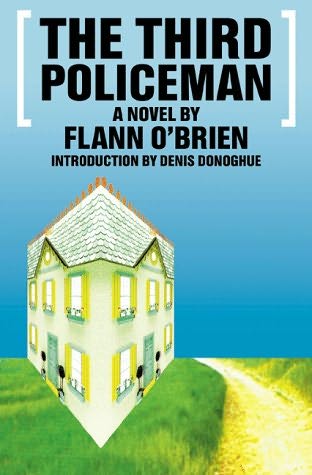
Dog Ears #12: The Third Policeman

To honor my Irish heritage and the arrival once again of St. Patrick's Day, I read The Third Policeman by celebrated Irish author Flann O'Brien (the pen of name Brian Ó Núalláin, who also wrote as Myles na gCopaleen).

The cover art feels poorly illustrated... until you hit page 52 and things begin to fall into place

Wellll... O.K., it's only a coincidence that I'm writing this two days before St. Patrick's Day. The real reason I selected this book is that I'm a big LOST nerd and a few years back one of the writers (Craig Wright) remarked, after the book was seen in Desmond's bunk in The Hatch, that the book "was selected for a reason" and contained key insights into the show.

There were some interesting echoes between the two, but the primary possible connection (which I will discuss in a moment) seems to already have been discounted by LOST honchos Lindelof and Cuse.

*THE THIRD POLICEMAN SPOILERS AHEAD*

I'm not a big fan of spoilers, but in this case I feel I can't avoid talking about them. The reason? The Introduction to The Third Policeman gave away the twist ending.

The Introduction!

p.vii (taken from a 1940 letter from O'Brien to William Saroyan):

When you get to the end of this book you realize my hero or main character (he's a heel and a killer) has been dead throughout the book and that all the queer ghastly things which have been happening to him are happening in a sort of hell which he has earned for the killing.

How can it be OK to divulge this kind of information in the Introduction, especially for a book that isn't widely known and therefore not something that everyone pretty much has heard of before à la what happens at the end of Romeo and Juliet or Of Mice and Men? Or maybe the better question is, are we not supposed to read the Introduction until after we've read the book proper? I'm at a loss here- anyone knowing the proper reading and writing etiquette please chime in.

Since the folks at LOST have repeatedly denied that the scenario we've been watching for four seasons now is a representation of limbo or the afterlife, the "big" connection doesn't resonate. That said, there are some interesting minor connections in the dog-ears to follow.

SEE! Desmond was reading it RIGHT HERE and, and it has to mean something, right?

One more (proper?) nugget from the Intro before we smooth back the dog-ears. This bit of information completely endeared me to the author before ever reading a line of his work:

He could not face the humiliation of telling Dublin that his second novel had been rejected in two continents, so he took a desperate step. He pretended that the sole typescript of the novel had been lost and that he could not write it again. Donagh MacDonagh was the only friend to whom he confided the truth. The book was not published till 1967, a year after O'Brien's death.

O'Brien wrote what is now considered a minor masterpiece in 1939-40, but he lived with feelings of deception and shame about it until his death twenty seven years later... when it was promptly published to great acclaim!

Life's a bitch and then you die and then you get published.

With no further ado, here are my selections from this most unusual, Seussian, frustrating, Escherian, frightening, Carrollian, bicycle- and pancake-obsessed and realistically surrealist novel:

p21 "The softening and degeneration of the human race he* attributes to its progressive predilection for interiors and waning interest in the art of going out and staying there. This in turn he sees as the result of the rise of such pursuits as reading, chess-playing, drinking, marriage and the like, few of which can be conducted in the open."

* the "he" in question is the deep-in-left-field (and fictional) philosopher de Selby, who the unnamed narrator is obsessed with, committing murder to bankroll his pursuit of writing a definitive commentary on de Selby's life. It says a bit about the narrator that some of de Selby's core beliefs are that the world is not round, but "sausage-shaped," and that the dark of night is brought on by an accumulation of "dark air" from "a staining of the atmosphere due to volcanic eruptions too fine to be see." This may also be a good time to point out that the author O'Brien is described as "a natural alcoholic" and writes as though he were crazy in the coconut.

p24 "In the darkest corner of the room near the window a man* was sitting in a chair, eying me with a mild but unwavering interest."

* the description of this man Mathers is eerily reminiscent of LOST's favorite apparition Jacob.


p44 (the one-legged narrator discusses the value of life with the one-legged thief Finnucane):

Is it life? Many a man has spent a hundred years trying to get the dimensions of it and when he understands it at last and entertains the certain pattern of it in his head, by the hokey he takes to his bed and dies! He dies like a poisoned sheepdog.

p47 desideratum | diˌsidəˈrätəm; -ˈrātəm; -ˌzidə-|
noun ( pl. -ta |-tə|)
something that is needed or wanted : integrity was a desideratum.
ORIGIN mid 17th cent.: from Latin, ‘something desired,’ neuter past participle of desiderare (see desiderate ).

p48 factivity/factive |ˈfaktiv|
adjective Linguistics
denoting a verb that assigns the status of an established fact to its object (normally a clausal object), e.g., know, regret, resent.

p50 "Of all the many striking statements made by de Selby, I do not think any of them can rival his assertion that 'a journey is an hallucination'."

De Selby's theory of night bears a strong resemblance to the island's "smoke monster"

p59 "'The first beginnings of wisdom,' he said, 'is to ask questions but never to answer any. You get wisdom from asking and I from not answering.'"

p66 sempiternal |ˌsempəˈtərnl|
adjective
eternal and unchanging; everlasting : his writings have the sempiternal youth of poetry.
DERIVATIVES
sempiternally |ˈˈsɛmpəˈtərnli| adverb
sempiternity |-ˈtərnitē| |ˈsɛmpəˈtərnədi| noun
ORIGIN late Middle English : from Old French sempiternel or late Latin sempiternalis, from Latin sempiternus, from semper ‘always’ + aeternus ‘eternal.’

p72 "It was so faultless and delightful that it reminded me forcibly, strange and foolish as it may seem, of something I did not understand and had never even heard of."

p75 acatalectic |āˌkatlˈektik| Prosody
adjective
(of a line of verse) having the full number of syllables.
noun
a line of verse of such a type.

p83 banjaxed/banjax |ˈbanˌjaks|*
verb [ trans. ] Brit., informal
ruin; incapacitate : he said the scheme was banjaxing the tourist industry.
ORIGIN 1930s: originally Anglo-Irish, of unknown origin.

*"banjax" is offically my new favorite word. Please, don't make me banjax you.

p 105 pari passu |ˌpärē ˈpäˌsoō|
adverb
side by side; at the same rate or on an equal footing : early opera developed pari passu with solo song.
ORIGIN Latin, literally ‘with equal step.’

nolle prosequi |ˌnälē ˈpräsiˌkwē|
noun Law
a formal notice of abandonment by a plaintiff or prosecutor of all or part of a suit or action.
• the entry of this in a court record.
ORIGIN late 17th cent.: Latin, literally ‘be unwilling to pursue.’

p123

'And he lay looking at the map for five years more before he saw that it showed the way to eternity.'
'To eternity?'
'Certainly.'
'Will it be possible for us to come back from there?' I whispered.
'Of course. There is a lift.'


p133

'How big is all this place?'
'It has no size at all,' the Sergeant explained, 'because there is no difference anywhere in it and we have no conception of its unchanging coequality.'


p138 "'But the secret of it all-in-all,' continued the Sergeant, 'is the daily readings*. Attend to your daily readings and your conscience will be as clear as a clean shirt on Sunday morning. I am a great believer in the daily readings.'"

*do you get the sense that Locke was a big fan of the "daily readings" before he screwed the pooch at the end of Season Two?

p158 "'Strange enlightenments are vouchsafed," I murmured, 'to those who seek the higher places.'"

Tuesday, February 19, 2008

Dog Ears #11: Against Nature (A Rebours)

Coincidentally, the protagonist of Zeroville, the last book I read, was obsessed with making a film based on Là-Bas, which was written by Joris-Karl Huysmans, the author of the next book in my to-read stack Against Nature (A Rebours). Against Nature was published in 1884 and caused a major stir in the literary community for its break with Naturalism, glorifying of Decadence, general blasphemy and controversial explosion/expansion of the scope of a novel.

Haven't we all known guys like this?

Huysman's fin de siècle novel has only one character, virtually no narrative storyline, and exists primarily to catalogue the scathing musings of its misanthropic protagonist, the solipsistic and effete aesthete Des Esseintes, who is a barely-fictionalized version of Huysmans himself.

In other words Against Nature is Huysman's blog, his forum for hating on the unworthy and loving on his faves and generally saying "look at how clever I am!" Fortunately for Huysmans, he was an enormously talented (and tormented, and viciously funny) writer and Against Nature holds up as a mammoth treatise on life, misery and the pursuit of the unattainable. Any fan of Oscar Wilde's The Picture of Dorian Gray should read Against Nature, the "poisonous French novel" that sends Dorian down the path of debauchery and madness.

One final note, this book is the inspiration for Steely Dan's 2000 album Two Against Nature, and I imagine any Dan fans who've read up about the personal lives of Mssrs Becker and Fagan and/or listened closely to their lyrics will agree it's an inspired choice.

From the Introduction by Patrick McGuinness

p xvi "Perhaps the belief that there was nothing new was itself a necessary prelude to creating the new."

p xxxiii "How could a novel so ending-obsessed, plotless and gridlocked by description be seen as liberating? In certain respects, it was a version of Flaubert's dream of a book 'about nothing'."
- perhaps Jerry and Larry were fans of Against Nature too?

From Against Nature

p21 higgledy-piggledy|ˈhigəldē ˈpigəldē|
adverb & adjective
in confusion or disorder : [as adv. ] bits of paper hanging higgledy-piggledy on the furniture and walls | [as adj. ] a higgledy-piggledy mountain of newspapers.
ORIGIN late 16th cent.: rhyming jingle, probably with reference to the irregular herding together of pigs.

p22 "Nature, he used to say, has had her day; she has finally and utterly exhausted the patience of sensitive observers by the revolting uniformity of her landscapes and skyscapes."
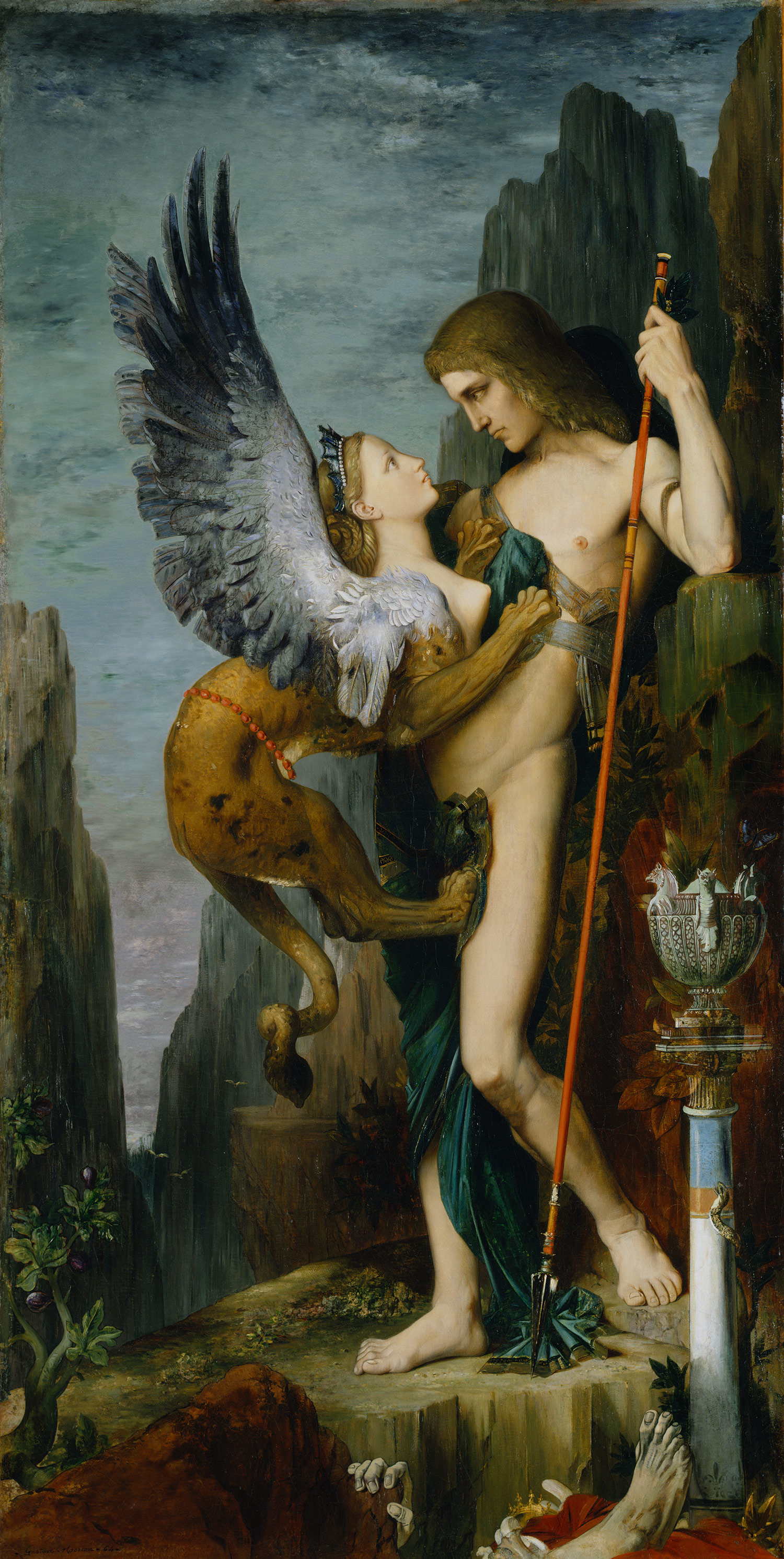
Don't get Des Esseintes started on Gustave Moreau...

p28 caesura |siˈ zh oŏrə; -ˈzoŏrə|
noun
(in Greek and Latin verse) a break between words within a metrical foot.
• (in modern verse) a pause near the middle of a line.
• any interruption or break : an unaccountable caesura: no deaths were reported in the newspapers.
ORIGIN mid 16th cent.: from Latin, from caes- ‘cut, hewn,’ from the verb caedere.

prosody |ˈpräsədē|
noun
the patterns of rhythm and sound used in poetry : the translator is not obliged to reproduce the prosody of the original.
• the theory or study of these patterns, or the rules governing them.
• the patterns of stress and intonation in a language : the salience of prosody in child language acquisition | early English prosodies.

p56 aquarelle |ˌäkwəˈrel; ˌak-|
noun
a style of painting using thin, typically transparent, watercolors.
• a painting in such a style.
ORIGIN mid 19th cent.: from French, from Italian acquarella ‘watercolor,’ diminutive of acqua, from Latin aqua ‘water.’

p75 casuist |ˈka zh oōist|
noun
a person who uses clever but unsound reasoning, esp. in relation to moral questions; a sophist.
• a person who resolves moral problems by the application of theoretical rules to particular instances.

p76 "For several days in succession, his brain was a seething mass of paradoxes and sophisms, a tangle of split hairs, a maze of rules as complicated as the clauses of law, open to every conceivable interpretation and every kind of quibble, and leading up to a system of celestial jurisprudence of positively baroque subtlety."

an illustration by Arthur Zaidenberg from the 1931 Illustrated Editions issue of A Rebours

p94 "... and it is of course true that, just as the loveliest melody in the world becomes unbearably vulgar once the public start humming it and the barrel-organs playing it, so the work of art that appeals to charlatans, endears itself to fools, and is not content ti arouse the enthusiasm of a few connoisseurs, is thereby polluted in the eyes of the initiate and becomes commonplace, almost repulsive."

p110 ritornel/ritornello |ˌritərˈnelō|
noun ( pl. -nellos or -nelli |-ˈnelē|) Music
a short instrumental refrain or interlude in a vocal work.
• a recurring tutti section in a concerto.
ORIGIN Italian, diminutive of ritorno ‘return.’

p118 "Once again, he told himself, the solitude he had longed for so ardently and finally obtained had resulted in appalling unhappiness, while the silence which he had once regarded as well-merited compensation for the nonsense he had listened to for years now weighed unbearably upon him."

p125 trencherwoman/trencherman |ˈtren ch ərmən|
noun ( pl. -men) [usu. with adj. ] humorous
a person who eats in a specified manner, typically heartily : he is a hearty trencherman, as befits a man of his girth.

p141 panegyrist/panegyrize |ˈpanəjəˌrīz|
verb [ trans. ] archaic
speak or write in praise of; eulogize.

p145 purblind |ˈpərˌblīnd|
adjective
having impaired or defective vision.
• figurative slow or unable to understand; dim-witted.

p161 "Yet, the staff of a tavern were every bit as stupid and mercenary, as base and depraved, as the staff of a brothel. Like the latter, they drank without being thirsty, laughed without being amused, drooled over the caresses of the filthiest workman and went for each other hammer and tongs at the slightest provocation."
- I hereby promise to try and start working "go at it hammer and tongs" into conversation

p170 sudorific |ˌsoōdəˈrifik| Medicine
adjective
relating to or causing sweating.
noun
a drug that induces sweating.
ORIGIN early 17th cent.: from modern Latin sudorificus, from Latin sudor ‘sweat.’

p183 hieratic |ˌhī(ə)ˈratik|
adjective
of or concerning priests : he raised both his arms in an outlandish hieratic gesture.
• of or in the ancient Egyptian writing of abridged hieroglyphics used by priests. Compare with demotic .
• of or concerning Egyptian or Greek styles of art adhering to early methods as laid down by religious tradition.

p193 Des Esseintes, while fantasizing about never eating again while receiving all of his nourishment in the form of "peptone enemas", mutters:

"What an absolute release from the boredom that invariably results from the necessarily limited choice of dishes! What a vigorous protest against the vile sin of gluttony! And last but not least, what a slap in the face of Mother Nature, whose monotonous demands would be permanently silenced!"

From Appendix II

p222 alembicated/alembic |əˈlembik|
noun
a distilling apparatus, now obsolete, consisting of a rounded, necked flask and a cap with a long beak for condensing and conveying the products to a receiver.

p223 (from Emile Goudeau's 1884 review of Against Nature):

M. Huysmans, with a remarkable talent and stupefying erudition, has put together in his book Against Nature all the elements of human despair. He has solidly spat on every pleasure, and kept for himself the terrible joy of abolishing human joy. An unhealthy book, but artistically very beautiful, perfectly crafted and skillfully wrought.

Monday, February 11, 2008

Dog Ears #10: Zeroville

Sometimes I hate myself for giving in to the siren song of movies again and again. Part of me thinks that I should know better by now. That I'm looking for something out of films that I can never find again.

Title is taken from Godard's ALPHAVILLE

This nagging gnawing feeling is magnified a thousandfold and distorted into cinematic metafiction in Steve Erickson's Zeroville, a 2007 book that came to my attention from a number of year-end "Best of 2007" lists. The cover art (sucker that I am?) intrigued me even more- why did this bald man have Montgomery Clift and Elizabeth Taylor from A PLACE IN THE SUN tattooed on his head, and what was he gazing at in that empty deep blue space?

Author Erickson is also the film critic for Los Angeles magazine (a good mag that, tellingly, I kept my subscription to during my four years in NYC), and he brings his cynical sense of humor and archivist's passion for films and the film industry to bear on this fictionalized narrative set among "real" Hollywood of the late 1960s, 70s, and early 80s. "Cinéautistic" protag Vikar (the fellow on the cover) either loses or finds his mind with the help of industry friends like John Milius, punk music, and a terrifying recurring dream that doesn't sound all that farfetched to a movie obsessive like me.

Vikar refers to Milius (seen here directing CONAN) as "Viking Man"

The book is frustrating, at times feeling like a self-satisfied collection of obscure film references and trivia held together by the haphazard wanderings of a more-violent Forrest Gump type. But there are stretches where Vikar's quest transcends the limitations of the structure and becomes something unique in its ability to communicate why people who perhaps should know better still look for something (unattainable?) in darkened movie theaters.

p42 "I mean, that's the whole thing about the movies," says the burglar*. "Bigger than the sum of the parts and all that? If the parts are too good, the whole is somehow less. I mean, you can't have, you know, Trane doing the score for Now, Voyager."

* yes, this is the kind of book where burglars wax poetic about the philosophy of cinema.

p119 "When Michael has Fredo killed, it isn't just Cain slaying Abel. It's Abraham sacrificing Isaac, because Michael has assumed the role of the father to his older brother, who has assumed the role of the son. Michael sacrifices the child to the god called Family; he destroys the family in its corruptible human form to preserve the idea of Family that's more divine, and to preserve Michael's love for Family that the older brother has betrayed."

p265 "The thing is, that movie last night* is a completely different movie when you watch it by yourself. Why is that? Movies are supposed to be watched with other people, aren't they? Isn't that the point of movies–you know, one of those social ritual things, with everyone watching? It never occurred to me a movie might be different when you don't watch it with anyone else."

* A PLACE IN THE SUN

p266 "Vikar says, 'Once Cassavetes told me about seeing A Place in the Sun when it came out. He hated it so much that he went back and saw it the next day and then every day for a week, until he realized he loved it. ... So why does that happen?... The movie hasn't changed. It's still the same exact movie, but it's like it sets something in motion, some understanding you didn't know you could understand, it's like a virus that had to get inside you and take hold and maybe you shrug it off–but when you don't, it kills you in a way, not necessarily in a bad way because maybe it kills something that's been holding you down or back, because when you hear a really really great record or see a really great movie, you feel alive in a way you didn't before...'"

Taylor saved a choking Clift's life by pulling two of his teeth out of his throat after he crashed his car in 1956

revolves around Vikar's obsession with two films in particular, George Stevens' A PLACE IN THE SUN (1951) and Carl Theodore Dreyer's THE PASSION OF JOAN OF ARC (1928). Since I hadn't seen either before reading the book, I thought I'd at least check out one and rented A PLACE IN THE SUN. It's not a movie that you can necessarily "enjoy" on a story level, but the technique of the direction, cinematography and editing was certainly far ahead of its time. After seeing PLACE and from what I've gleaned about JOAN OF ARC, I think I understand the connection Vikar felt to these two films in particular. They both feature intimate close-ups that so fill up the screen that the viewer is drawn in deeper than they may be prepared for, and both feature stars (Clift and Maria Falconetti) whose success playing tragic roles on screen somehow translated to lives that became tragedies in reality.

That may be what makes film such a unique medium, not only can it be transcendent and transformative for the audience, but it exerts an even more powerful, and sometimes dangerous, pull on those who create them.


Thursday, January 10, 2008

Dog Ears #9: Blood Meridian, or, The Evening Redness in the West

Sad but true: it often takes having a major writer's work adapted into a feature film in order to get me off my duff and into his canon. Sometimes even more than one film.

I imagine this is the look on Cormac McCarthy's face while he's writing

Such was the case with and the Coen Brothers' 2007 adaptation of his 2005 novel No Country For Old Men. For many years I've heard McCarthy's praises sung by people I liked and/or respected, but fair or unfair I decided to steer clear of him after Billy Bob Thornton's 2000 adaptation of his All The Pretty Horses, on the basis that I thought All The Pretty Horses was an atrocious title and the movie (which I've still never seen) looked lame.

Despite my misgivings about the title of his latest adaptation, I took the plunge, saw NO COUNTRY, and liked the first two-thirds enough to buy the paperback of what I understood to be McCarthy's masterpiece, Blood Meridian.

Well one thing's for certain, Ridley Scott's 2009 adaptation of Blood Meridian won't have roles for Matt Damon, Penelope Cruz or Elliot from E.T.: Blood Meridian is a filibuster of bloodlust and malignancy.

Naturally, things being what they are, atrocities beyond your wildest imaginings are transformed into epic poetry thanks to McCarthy's blistering, almost psychedelic prose. I certainly didn't enjoy reading Blood Meridian (first published in 1985), and for almost half the book I was barely aware what was happening in a narrative sense (thanks largely to his freakshow thesauraus, disdain for punctuation, and penchant for Spanish), but I won't soon forget the trail of blood blazed by the kid and the judge.

Blood Meridian = Hieronymus Bosch + 1850's Old West

The book contained far too many words I wanted to look up and noteworthy passages to dogear in the traditional sense, so I turned down page corners in haphazard fashion, hoping I wouldn't regret the ears undogged...

p.52 "Already you could see through the dust on the ponies' hides the painted chevrons and the hands and rising suns and birds and fish of every device like the shade of old work through sizing on a canvas and now too you could hear above the pounding of the unshod hooves the piping of the quena, flutes made from human bones, and some among the company had begun to saw back on their mounts and some to mill in confusion when up from the offside of those ponies there rose a fabled horde of mounted lancers and archers bearing shields bedight with bits of broken mirrorglass that cast a thousand unpieced suns against the eyes of their enemies."
(it was about this point that I realized I was in over my head, reading-wise)

p.141 "But no man can put all the world in a book. No more than everthing drawed in a book is so."

p.153 "Notions of chance and fate are the preoccupation of men engaged in rash undertakings."

p.189 withy: noun ( pl. withies or withes |wiθs; wiðz|)
a tough flexible branch of an osier or other willow, used for tying, binding, or basketry.
• another term for osier .
(I included this for all the Scrabble players out there!)

p.193 posada: noun
(in Spanish-speaking regions) a hotel or inn.
• (also Las Posadas) a ritual reenactment of Mary and Joseph's search for a lodging in Bethlehem, performed just before Christmas.
ORIGIN Spanish, from posar ‘to lodge.’
(I thought Yankee haters and Yankee fans alike would be interested to know this)

p. 198 suzerain: noun
a sovereign or state having some control over another state that is internally autonomous.
• historical a feudal overlord.


This is the rarely seen "centroid of peace"

p.218 "Glanton's eyes in their dark sockets were burning centroids of murder and he and his haggard riders stared balefully at the kid as if he were no part of them for all they were so like in wretchedness of circumstance."
(I reread this sentence a few times the first time around- I just couldn't believe the audacity of a writer actually typing "burning centroids of murder"!!!)

centroid: noun
Mathematics- the center of mass of a geometric object of uniform density.

p.247 "In the neuter austerity of that terrain all phenomena were bequeathed a strange equality and no one thing nor spider nor stone nor blade of grass could put forth claim to precedence."
(that's one austere desert my friend)

p.249 "Men are born for games. Nothing else. Every child knows that play is nobler than work."
(this line of thinking reaches its, and perhaps the entire book's, apotheosis at the end of the page with-)
"War is the ultimate game because war is at last a forcing of the unity of existence. War is god."

p.252 "Your heart's desire is to be told some mystery. The mystery is that there is no mystery."

p.330 "He poured the tumbler full. Drink up, he said. The world goes on. We have dancing nightly and this night is no exception."


Thursday, December 13, 2007

Dog Ears #8: Backstory 4

There was a time not too long ago when even the thought of reading anything in the Backstory series made me feel all icky inside. The four installments of Backstory are collections of interviews with screenwriters of different eras (1 is "The Golden Age", 2 is 1940s and 1950s, 3 is 1960s, and 4 is 1970s and 1980s) compiled and edited by Marquette film professor Patrick McGilligan. Thanks to my own efforts and the gift-giving prowess of Mrs. Word Player, I now have all four books in the excellent but largely out-of-print series, but after a really rough time writing my fifth screenplay Blood is Thicker (still unfinished after working on it for 11 months of '06 and early '07) I couldn't stomach reading all these success stories for a while.

You can't make this stuff up

Thankfully, time heals wounds of this sort pretty efficiently, so when I peeked into the one volume I hadn't read yet a few weeks ago I was happy to discover that my appetite for intimate conversations with working writers had returned. It's funny how the same words can be exasperating one day and inspiring the next...

The following are anecdotes, insights, self-recriminations and new lingo taken from Backstory 4: Interviews with Screenwriters of the 1970s and 1980s.

ROBERT BENTON
p. 29 "The banalities of married life are, for me, far more interesting and more poignant than the intensity of romance. There's something I find deeply moving about ordinary life."
re: his script for NADINE (1987)

p. 35 "There are two models (of screenplay structure). In one, plot grows out of character. This is the (Howard) Hawks model. In the other, character grows out of plot. This is the [Otto] Preminger model. When I do the architecture on a script of my own, I follow the Hawks approach. I do it so that characters become more complex, and they don't tell you where they're going until they get there."

LARRY COHEN
(Cohen's script for PHONE BOOTH, ultimately made in 2002 with Joel Schumacher at the helm, was once considered by Alfred Hitchcock.)

p. 77 "(Hitchcock) seemed very, very intimidated by Lew Wasserman and the Universal executives, who had more or less undermined his confidence in himself. While making him a very rich man, they'd also destroyed him as an artist. Hitch had severed his ties with [composer] Bernard Herrmann, for example, who had been a close friend and great collaborator, and mainly it was the Universal executives who poisoned his mind against Herrmann and convinced him he needed somebody like Henry Mancini to write songs and a hipper musical score. Which he never got, by the way."

BLAKE EDWARDS
p. 91 tsuris: |ˈtsoŏris; ˈtsər| noun, informal
trouble or woe; aggravation.
ORIGIN early 20th cent.: from Hebrew.

p. 95 "Therefore I consider that slapstick–literally slapstick–is not entirely what I do. Only some of it turns out to be slapstick. Slapstick comes from vaudeville–it comes from what they called "the slap stick" (slapping sound as he demonstrates), which made that sound."

WALTER HILL
p. 106 roustabout: noun
an unskilled or casual laborer.
• a laborer on an oil rig.
• a dock laborer or deckhand.
• a circus laborer.
ORIGIN mid 19th cent.: from the verb roust

"All of this taught me one important thing that carried over to writing. If you are capable of making a living out of your talent and imagination, you are a privileged soul. As to the actual writing, you learn about writing by reading. And then you learn to make use of your own particular attitudes, gifts, and skills by–writing, writing, writing."

p. 113 "I don't pretend to be a scholar about the history and evolution of screenwriting, and I think you have to approach it as a craft rather than an art. But it's the old story; if the craft gets good enough, it is an art."

p. 116 "My clearest impression is that (Michael) Eisner wanted movies to be a kind of pleasantly flavored chewing gum and was almost physically uncomfortable in dealing with anything about the dark side of the human heart."

Remind me to tell you my Harry Dean Stanton story some day

p. 122 (re ALIEN) "I named her "Ripley" (after "Believe It or Not"); later, when she had to have a first name for ID cards, I added "Ellen" (my mother's middle name). I called the ship Nostromo (from Conrad: no particular metaphoric idea, I just thought it sounded good). Some of the characters are named after athletes: Brett was for George Brett, Parker was for Dave Parker of the Pirates, and Lambert was Jack Lambert of the Steelers."

p. 128 "My favorite description of the dilemma of screenwriting comes from David Giler, "Your work is only read by the people who will destroy it."

RUTH PRAWER JHABVALA
p. 151 "What I do realize is that I mustn't have a single word that's not absolutely necessary, no "Oh yes, I see," nothing like that. You have to compress and compress and just give them the essence."

LAWRENCE KASDAN
p. 170 "That's what the STAR WARS saga is about–it's about following those things which are strongest in you and imposing them on the world. Making a career in Hollywood is like that if you want to do your own work. If you want to do what they want you to do, it's easy. You just say yes. But if you want to do what you want to do, you're constantly manipulating the chaos of the system."

p. 176 "That's what all great tragedies are about for me–that in this adherence to a single idea, we sometimes sacrifice everything."
re: his script for BODY HEAT (1981)

ELMORE LEONARD
p. 217 "What's amazing to me when I think about it, is that while Hollywood in general prefers plot-driven stories (they ask, "What's it about?"), thirty-three of my thirty-five books, all character-driven and talky, have either been optioned or bought outright for film."

PAUL MAZURSKY
p. 229 "I'm very sympathetic to those characters. I feel that the middle class is not treated in terms of tragedy. You have to be very rich or very poor to be thought of as a tragic figure."

Thulsa-Thulsa Doom y'all

JOHN MILIUS
p. 296 colloquy: |ˈkäləkwē| noun ( pl. -quies)
1 formal: a conversation : they broke off their colloquy at once | an evening of sophisticated colloquy. See note at conversation .
2 a gathering for discussion of theological questions.
ORIGIN late Middle English : from Latin colloquium ‘conversation.’

p. 299
PM: Was Robert Shaw really as drunk as they say, shooting the scene?
JM: He was totally drunk.

(Shaw had just been busted screwing the nanny by his wife, and kept interjecting his drunken thoughts about the situation into the Indianapolis scene from JAWS, a scene that Milius wrote as a favor to Spielberg. What we see in the final product, of course, has all the nanny bits cut out.)

FREDERIC RAPHAEL
p. 328 (this next bit speaks to questions I had after viewing TWO FOR THE ROAD (1967), written by Raphael)

PM: What was the genesis of the film you did make next, TWO FOR THE ROAD?
FR: (My wife and I) used always to just pack up and travel together. While we were driving down to the south of France from London on one of these trips, I said, "Imagine if we met ourselves as we were ten years ago," and of course the idea revealed itself as a movie.


p. 381 confrere: noun
a fellow member of a profession; a colleague : executives from the four broadcast television networks, along with their cable confreres.
ORIGIN mid 18th cent. : French, from medieval Latin confrater, from con- ‘together with’ + frater ‘brother.’

"The difference between a movie and a novel is that a movie is just the surface of things, and the meanings and emotions can only be implicit."

Friday, November 23, 2007

Dog Ears #7: A Prayer For Owen Meany

In Dog Ears #6 I listed some of my favorite bits from the first half of John Irving's A Prayer For Owen Meany, but not before expressing my hope that the lull that'd set in about 200 pages into the 617 page novel would end soon.

Sadly, I felt it never did. This was a book that ended with a bang AND a whimper, but mostly with relief that it was finally over.

This image is a good match for the book's self-important, unsubtle tone

Soon after the fun of meeting the town of Gravesend for the first time had worn off, and the tragic events that set the story in motion had played out, the book settled into a repetitive loop of heavy-handed foreshadowing and even less novelistic political editorializing. The split arena gambit of telling the story in flashback and in the narrator's Owen-less present backfired severely, and I was sorely tempted to skim any page that took place in the late 80s.

It's one thing to weave in a political theme or point of view, and quite another to hijack what had been a promising tale of predestination vs free will in order to deliver pious shrill rants. This will almost certainly be the last Irving I read.

That said, I did dog-ear quite a few pages in the second half. Let's see how they go down the second time around...

p.372 "She possessed all the up-to-date information that often passes for intelligence among people who make a daily and extensive habit of the New York Times..."
(that one hit a little close to home!)

p.419 peavey: noun ( pl. -veys or -vies)
a lumberjack's cant hook with a spike at the end.
ORIGIN late 19th cent.: from the surname of the inventor.

p. 419 cant dog: noun
another term for cant hook .
(OK... I guess I have to look up cant hook)
cant hook: noun
a hinged metal hook at the end of a long handle, used for gripping and rolling logs.

it's weird to see the word "cant" without an apostrophe

p. 430 "THE COUNTRY WANTS A SAVIOR. THE COUNTRY IS A SUCKER FOR POWERFUL MEN WHO LOOK GOOD. WE THINK THEY'RE MORALISTS AND THEN THEY JUST USE US."

p. 450 macadam: noun
broken stone of even size used in successively compacted layers for surfacing roads and paths, and typically bound with tar or bitumen.
• a stretch of road with such a surface.

They were nuts for macadams

p. 458 "... Canada sold the United States over five hundred million dollars' worth of ammunition and other war supplies... ... by 1970, Canada–"per capita"–was earning more money as an international arms exporter than any other nation in the world..."
(who knew?)

p. 515 addlepated: along with "addleheaded, a synonym for "addlebrained," which means "lacking in common sense; having a muddled mind"

p522 (on discussing the difficulty of teaching students wit)
"It's always description that they miss; I swear, they think it's unimportant. They want dialogue, they want action; but there's so much writing in the description!"

p543 "I will tell you what is my overriding perception of the last twenty years: that we are a civilization careening toward a succession of anticlimaxes–toward an infinity of unsatisfying and disagreeable endings."