What came first, the music or the misery? People worry about kids playing with guns, or watching violent videos, that some sort of culture of violence will take them over. Nobody worries about kids listening to thousands, literally thousands of songs about heartbreak, rejection, pain, misery and loss. Did I listen to pop music because I was miserable? Or was I miserable because I listened to pop music?
- Rob Gordon,
High Fidelity
 I want a room that looks like this
So begins the film adaptation of Nick
Hornby's seminal (for mix-tape enthusiasts anyway) book
High Fidelity. I can't recall if this is an exact quote from the book (I haven't read it in 13 years) but it feels like one. I think it raises an excellent question, and to take it in a slightly different direction, I believe wholeheartedly that the music I listened to in my formative years had an enormous impact on what kind of person I became and what sort of aesthetic I developed.
A couple weekends ago I read
an interesting article in the
NY Times "Arts & Leisure" section on the reformed band
Portishead and the release of
Third, their first album in ten years. As I read I couldn't stop thinking how much I loved
Portishead's first record
Dummy (1994), and indeed how much that record altered my taste in music while it served as a soundtrack to my life for many months. In the spirit of Rob Gordon, I decided to make a list of the ten most influential records in my life, and amended the time span to records that came out during the most malleable and impressionable period in a music lover's life (according to me anyway)– the fifteen years from 11 through 25.
So, with no further ado, I want to kick off the ten part series "Bend Me, Shape Me" with the first record on my chronological list:
Depeche Mode's
A Broken Frame
, released September 27, 1982.
 "Where is she going?" I wondered.
I didn't discover A Broken Frame until two years after its release. Depeche Mode didn't really achieve a foothold in the U.S. until 1984 and the release of the single "People are People" from their fourth studio album Some Great Reward. In 1984 I was living in Cincinnati for the second time, and fell under the influence of their "alternative" record station 97X (immortalized by Dustin Hoffman's character in RAIN MAN who kept repeating their tagline "97X... BAM... the future of rock and roll"). Having recently left classic-rock dominated Charlotte, I was taken in by the sounds of new bands like The Smiths, Tears for Fears, The Cure, New Order, and especially Depeche Mode.
I loved "People are People" (my very first 12" remix purchase) and
Some Great Reward and saved up enough lawn-mowing money to buy the Mode back catalog on cassette, including their second album
A Broken Frame. It's hard to say with any precision now, but it felt like I listened to
A Broken Frame every day for a year. The first track "Leave in Silence" is an all-time fave and defines the early Mode sound:
dubby, echo chamber synthesizer loops, chunky
synth bass, spare drum machine with occasional low-end boom, interspersed with glockenspiel-
esque chimes and other metallic percussion, and singing that alternates between
gothic chanting, deadpan narration and earnest wailing.
For a teenager faced with all kinds of awakenings, the album's overall tone of alienation and matter-of-fact desperation hit the sweet spot for me. Fortunately, like most Mode records, it's also cut with just enough hope to keep you from slitting your wrists.
By far the weirdest (and, naturally, my favorite) track on the album is "Satellite". It opens with a lilting
synth reggae mood that creepily belies the lyrics:
Now hear this my friends
I'll never be the same again
Gonna lock myself in a cold black room
Gonna shadow myself in a veil of gloom
I will function, operate
I will be a satellite of hate
Looking at them now they aren't exactly
sophisticated lyrics (though quite sensational for a 20 yr-old songwriter), but they were very affecting at the time. What is a "satellite of hate" I wondered... and do I want to be one too? What could another person do to you that could make you feel this way?
Disillusioned, I was disenchanted
Forgot the love that had been implanted
When I first heard
Radiohead's O.K. Computer I thought that
A Broken Frame was its spiritual predecessor, both records cold to the touch, obsessed with the disconnection of the modern technological world, and yet filled with a longing for something better that really resonates with me.
Perhaps for some of those reasons,
Depeche Mode were always huge in the Soviet bloc of Eastern Europe, and the album's striking cover photograph strongly evokes the shadow of communist Mother Russia. I was only just becoming interested in politics at this time, and though I wasn't sure exactly what they were trying to say in songs like "Monument" (later covered terrifically by Gus Gus for 1997's up-and-down Mode tribute album
For the Masses), I was pretty sure they had something to do with communism.
So we picked up our tools and we worked in the morning light
With the last stone placed wasn't it a wonderful sight?
But it fell back down and scattered all around
Anything passes when you need glasses
My monument
it fell down
Work all of my days for this kind of praise
it fell down
The synthesizer work is especially ominous in this one, with plenty of creepy horn sounds and spare
electro touches. It's also one of the few tracks on the album where both Dave
Gahan and Martin Gore sing... their voices are both so different yet they blend together quite unusually here.
 yes, I even loved their haircuts
Even the more
bubblegummy songs on the record like "The Meaning of Love" and "A Photograph of You" were fascinating to my young mind. I was used to songs that
told me what love was, not ones that
asked me what it meant.
The only song off this record that seems to be known by the casual
Depeche Mode fan is "See You", which is a sentimental favorite of mine. When you're in Junior High, you suddenly feel like childhood is over yet adulthood hasn't begun and you're simultaneously nostalgic for the past and the future. The lyrics here seemed to match my frame of mind perfectly.
Well I know five years is a long time
And that times change (oh that times change)
But I think that you will find
People are basically the same (basically the same)
 Ask me about GusGus!
 GusGus have a healthy self-image.
 To better understand who I am, it helps to know that I was too embarrassed to introduce myself to President Bongo (pictured) of GusGus on the dancefloor of Avalon.



 from 1996, the definitive intersection of all the best parts of MBM.

 . European-art-film-soundtrack-y guitar layered over

 on the

 , which I remember being disgusting in all the best ways when I saw it in high school.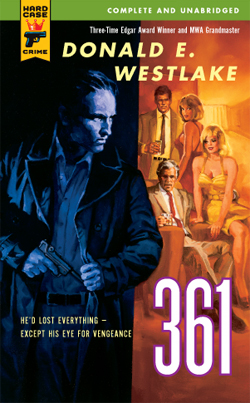


 and proceeded to rip me a new one in the "how dare you read a degenerate book that that!" vein. I was so flabbergasted that anyone who knew me could think that I supported out-of-control misogyny, materialism and murder that I failed to defend myself from their judgment in any cogent way. Later, I realized that all I needed to say was "Hey, it's satire! Get over yourself!"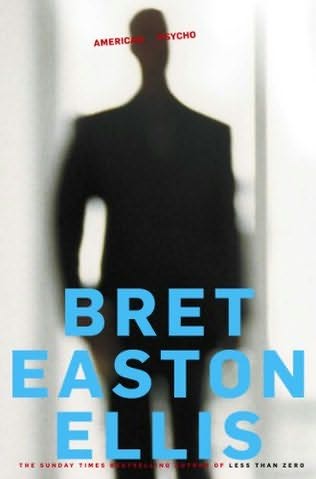


 , the usage of which
 hit the nail luridly on the head.


 I started digging into the band's back catalog. Not only were they prolific as a band, but there were solo projects available by the lead singer and songwriter Steve
 as much now as i did then (which was quite a bit- it's excellent), but the
  became one of my favorite records of all time, and is still in heavy rotation at the Word Player home 20 years later.


 . Believe me, for a 12 year-old thinking about what the world would be like when he was 29, 1999 felt like a million years away (kind of like it does now in the rearview mirror).