Monday, April 28, 2008

Bend Me, Shape Me #1: A Broken Frame

What came first, the music or the misery? People worry about kids playing with guns, or watching violent videos, that some sort of culture of violence will take them over. Nobody worries about kids listening to thousands, literally thousands of songs about heartbreak, rejection, pain, misery and loss. Did I listen to pop music because I was miserable? Or was I miserable because I listened to pop music?
- Rob Gordon, High Fidelity

I want a room that looks like this

So begins the film adaptation of Nick Hornby's seminal (for mix-tape enthusiasts anyway) book High Fidelity. I can't recall if this is an exact quote from the book (I haven't read it in 13 years) but it feels like one. I think it raises an excellent question, and to take it in a slightly different direction, I believe wholeheartedly that the music I listened to in my formative years had an enormous impact on what kind of person I became and what sort of aesthetic I developed.

A couple weekends ago I read an interesting article in the NY Times "Arts & Leisure" section on the reformed band Portishead and the release of Third, their first album in ten years. As I read I couldn't stop thinking how much I loved Portishead's first record Dummy (1994), and indeed how much that record altered my taste in music while it served as a soundtrack to my life for many months. In the spirit of Rob Gordon, I decided to make a list of the ten most influential records in my life, and amended the time span to records that came out during the most malleable and impressionable period in a music lover's life (according to me anyway)– the fifteen years from 11 through 25.

So, with no further ado, I want to kick off the ten part series "Bend Me, Shape Me" with the first record on my chronological list: Depeche Mode's A Broken Frame, released September 27, 1982.

"Where is she going?" I wondered.

I didn't discover A Broken Frame until two years after its release. Depeche Mode didn't really achieve a foothold in the U.S. until 1984 and the release of the single "People are People" from their fourth studio album Some Great Reward. In 1984 I was living in Cincinnati for the second time, and fell under the influence of their "alternative" record station 97X (immortalized by Dustin Hoffman's character in RAIN MAN who kept repeating their tagline "97X... BAM... the future of rock and roll"). Having recently left classic-rock dominated Charlotte, I was taken in by the sounds of new bands like The Smiths, Tears for Fears, The Cure, New Order, and especially Depeche Mode.

I loved "People are People" (my very first 12" remix purchase) and Some Great Reward and saved up enough lawn-mowing money to buy the Mode back catalog on cassette, including their second album A Broken Frame. It's hard to say with any precision now, but it felt like I listened to A Broken Frame every day for a year. The first track "Leave in Silence" is an all-time fave and defines the early Mode sound: dubby, echo chamber synthesizer loops, chunky synth bass, spare drum machine with occasional low-end boom, interspersed with glockenspiel-esque chimes and other metallic percussion, and singing that alternates between gothic chanting, deadpan narration and earnest wailing.

For a teenager faced with all kinds of awakenings, the album's overall tone of alienation and matter-of-fact desperation hit the sweet spot for me. Fortunately, like most Mode records, it's also cut with just enough hope to keep you from slitting your wrists.

By far the weirdest (and, naturally, my favorite) track on the album is "Satellite". It opens with a lilting synth reggae mood that creepily belies the lyrics:

Now hear this my friends
I'll never be the same again
Gonna lock myself in a cold black room
Gonna shadow myself in a veil of gloom

I will function, operate
I will be a satellite of hate

Looking at them now they aren't exactly sophisticated lyrics (though quite sensational for a 20 yr-old songwriter), but they were very affecting at the time. What is a "satellite of hate" I wondered... and do I want to be one too? What could another person do to you that could make you feel this way?

Disillusioned, I was disenchanted
Forgot the love that had been implanted

When I first heard Radiohead's O.K. Computer I thought that A Broken Frame was its spiritual predecessor, both records cold to the touch, obsessed with the disconnection of the modern technological world, and yet filled with a longing for something better that really resonates with me.

Perhaps for some of those reasons, Depeche Mode were always huge in the Soviet bloc of Eastern Europe, and the album's striking cover photograph strongly evokes the shadow of communist Mother Russia. I was only just becoming interested in politics at this time, and though I wasn't sure exactly what they were trying to say in songs like "Monument" (later covered terrifically by Gus Gus for 1997's up-and-down Mode tribute album For the Masses), I was pretty sure they had something to do with communism.

So we picked up our tools and we worked in the morning light
With the last stone placed wasn't it a wonderful sight?
But it fell back down and scattered all around
Anything passes when you need glasses

My monument
it fell down

Work all of my days for this kind of praise
it fell down

The synthesizer work is especially ominous in this one, with plenty of creepy horn sounds and spare electro touches. It's also one of the few tracks on the album where both Dave Gahan and Martin Gore sing... their voices are both so different yet they blend together quite unusually here.

yes, I even loved their haircuts

Even the more bubblegummy songs on the record like "The Meaning of Love" and "A Photograph of You" were fascinating to my young mind. I was used to songs that told me what love was, not ones that asked me what it meant.

The only song off this record that seems to be known by the casual Depeche Mode fan is "See You", which is a sentimental favorite of mine. When you're in Junior High, you suddenly feel like childhood is over yet adulthood hasn't begun and you're simultaneously nostalgic for the past and the future. The lyrics here seemed to match my frame of mind perfectly.

Well I know five years is a long time
And that times change (oh that times change)
But I think that you will find
People are basically the same (basically the same)


Tuesday, April 15, 2008

Say It's All So, Joe!

Mythology has always floated my boat. Growing up, I loved reading the myths of the Greeks and Romans, as well as mythology from other countries around the world as provided by books like the pivotal (for me anyway) The Crimson Fairy Book. In college, I excitedly read the Joseph Campbell book The Hero with a Thousand Faces after I was tipped off by one of my film professors that Campbell was THE literary influence for George Lucas when he was creating the STAR WARS universe.

Better than CLASH OF THE TITANS!

Confident that I was now familiar enough with Campbell to get by, I didn't touch him again for almost fifteen years until I pulled Hero with a Thousand Faces off the bookshelf when Mrs. Word Player and I were housesitting in Laurel Canyon a while back. Reading him again, especially after focusing so much of my life as a development guy on dissecting the Hero's Journey and three-act narrative structure in screenplays, was eye-opening.

His writing and thinking was far more valuable than merely a guideline for understanding the past and creating fictional narratives, they were critical insights about how to interpret and experience your life's narrative.

Over the past several months we've watched the four-DVD set THE POWER OF MYTH, a series of interviews conducted by journalist (and former White House Press Secretary) Bill Moyers with Joseph Campbell in the last years of Campbell's life. Produced by PBS and originally aired in 1988, MYTH is an awe-inspiring portrait of one man's wisdom, drawn from a lifetime of studying the primal, archetypal stories told by and about our planet known as mythology.

"Spiritual life is the bouquet of natural life, not a supernatural thing imposed upon it."

Campbell, who was in his mid-80s as MYTH was filmed, is a surprisingly mesmerizing screen presence. Shot entirely in medium shots and close-ups, he has such an expressive face and an incredible gift for recall and oratory that you never think for a moment that you're just watching a talking head for an hour. Avuncular, charming, and powerful, Campbell has a similar quality as the Dalai Lama does in interviews I've seen: you simply want to know what they know so you can be the way they are.

His worthy foil is Moyers, no slouch himself in the brains or conversation department. Campbell was an agnostic and Moyers a practicing Christian, and the interplay as they take stabs at interpreting the wonder and meaning of life and death is an amazing thought provoker.

Can you believe it's taken me almost a year to reference STAR WARS in this blog?

I have grown comfortable knowing that I have far more questions than I do answers about why we're here and what (if anything) happens next, and Campbell's quote from the final minutes of the final episode of MYTH is one I can safely adopt as part of my personal philosophy:

“He who says he knows, doesn’t know. He who knows he doesn’t know, knows.”

The DVDs have gone out of print and now list on Amazon for $80 and up, so if you're interested I'd recommend Netflixing them. MYTH is not only a wild ride through history, religion, philosophy, poetry and more, but it's also one of the extremely rare examples of something truly and purely life-affirming. Dig it.

Sunday, April 6, 2008

Dog Ears #13: On the Good Life

I had only a faint remembrance of Cicero from my collegiate Political Science syllabus when I read a brief (but funny) passage devoted to knocking him down a peg in Huysman's Against Nature. That book's protag Des Esseintes delighted in calling Cicero "Chick-Pea" (the Latin translation of "Cicero") as he ripped him for his "long-winded style, the redundant metaphors and the rambling digressions" (p28) and much more.

After assassinating Julius Caesar, Brutus asked Cicero "to restore the Republic"

After reading a collection of Cicero's works from the 50s and 40s BC entitled On the Good Life, I'm happy to disagree with Des Esseintes. OK, Cicero was indeed a bit long-winded, but his insights into the core issues of life as he knew it (particularly one's relationships with other people and one's relationship with oneself) are remarkably, even incredibly, spot-on, relevant and and invaluable over 2000 years later.

Rather than fumble around for my own thumbnail description of who Cicero was, allow me to paste from Wikipedia:

Marcus Tullius Cicero (Classical Latin pronounced [ˈkikeroː], usually pronounced /ˈsɪsəroʊ/ in English; January 3, 106 BC – December 7, 43 BC) was a Roman statesman, lawyer, political theorist, and philosopher. Cicero is widely considered one of Rome's greatest orators and prose stylists.
Cicero is generally seen as one of the most versatile minds of Roman culture and his writing the paragon of Classical Latin. He introduced the Romans to the chief schools of Greek philosophy and created a Latin philosophical vocabulary. An impressive orator and successful lawyer, Cicero probably thought his political career his most important achievement. However, today he is appreciated primarily for his humanism and philosophical and political writings.

Yes, that was the right call.

There was just something mesmerizing about the title of this book, and even though I've been looking forward to some "Summer Reading"-type books, I knew I had to see if Cicero knew something about the elusive "Good Life" that I didn't know.

He did. He was plagued by many of the same vexations, frustrations and doubts that I am (and millions upon millions of others too, I'd venture). He placed a much higher premium on friendship than most thinkers I've come across, and as someone who has extremely strong feelings about the successes and failures I've experienced in friendships of my own, I was on the edge of my seat for nearly the whole book.

I highly recommend this book to those of you who often feel betrayed by the depth (or lack thereof) of modern interpersonal relationships and seek the ability to see others more clearly for who they are (and, the real trick, who they will be). This was by far my most dog-eared book to date...

Before his execution, Cicero's last words were said to be "do try to kill me properly"


From "Introduction"

p21 "In converting Classical Greek philosophy into Latin, Cicero "had to create new words. We owe him the terms quality, individual, vacuum, moral, property, induction, element, definition, difference, notion, comprehension, infinity, appetite, instance, science, image, species."

- damn!


p37 "Petrarch also welcomed (Cicero) as the spokesman for civilized, active leisure, and, in his essay On the Solitary Life and elsewhere, quoted him in order to show that the highest aim of leisure is to be busy."

p43 "Cicero's ideals do not dwell in Utopias, but in the real world. His treatises are for people who possess mature and independent minds, who have no desire to follow other minds slavishly, and who are compelled, in the course of their daily existences, to grapple with problems which are complex – rarely admitting of a purely intellectual solution – and which call on all the resources of their humanity."


From "Discussions at Tusculum"

p61 "If, therefore, there exists any man who is capable of regarding all the hazards and accidents of fortune and human life as endurable, a man moreover who is troubled neither by fear nor by distress nor by passion, a man of whom all empty pleasures of whatever kind leave utterly cold – then, if such a person exists, there is every reason why he should be happy."

p86 "For Dionysius was...a tragic poet (how good he may have been is beside the point, for in that art, more than any other, everyone seems entirely satisfied with his own efforts: I have never known a poet – and Aquinas was a friend of mine – who was not absolutely first class in his own eyes: that is how it is: you like your work, I like mine)."

- I think that observation holds true for more pursuits than poetry...


p88 "An acute first-class brain is the finest asset anyone can have – and, if we want to be happy, it is an asset we must exploit to the uttermost."

p104 "And what the contrast demonstrates is that the true satisfaction to be derived from food comes not from repletion, but from appetite – the people who run hardest after pleasure are the least likely to catch what they are after."


From "On Duties"

p122 "If we are trying to achieve mental enjoyment, for example, or relief from trouble, the findings of philosophy are of incomparable value, because the people who practise this study are perpetually searching for the things that produce a good and happy life."


From "On Friendship"

p181 (in discussing the recent death of his great friend Scipio)
"For I do not believe Scipio himself has suffered a misfortune. If anyone has suffered a misfortune, it is myself. But if you let your sorrows at such a happening overwhelm you, this shows how much you love, not your friend, but yourself."

p188 "Friendship, then, both adds a brighter glow to prosperity and relieves adversity by dividing and sharing the burden. And another of its very many remarkable advantages is this. It is unique because of the bright rays of hope it projects into the future: it never allows the spirit to falter or fall. When a man thinks of a true friend, he is looking at himself in the mirror. Even when a friend is absent, he is present all the same."

p193 "When a man shows kindness and generosity, his motive in doing so is not just to exact repayment. We do not hire out our favors, and charge interest for them: we behave kindly because that is the natural thing to do. The reason why we count friendship as a blessing is not because we are hoping for a material return. It is because the union is quite enough profit in itself."

p204 "If people whose lives are just constant wallowings in self-indulgence want to discuss friendship, let us not pay them the slightest attention. They do not understand the subject, either in practice or theory."

p208 "The friends we select ought to be sound and stable and reliable. But such people are distinctly scarce, and, besides, it is extremely difficult to pick them except by practical experience: and the problem is that this experience can only be acquired after the friendship has actually begun. That is to say, the friendship comes first and the material for estimating its desirability only becomes accessible later on; it is impossible to try one's friend out in advance."

- which is really too bad, don't you think?

p213 "Friendships formed before one grows up cannot possibly be stable or permanent. For young people's personalities change, and their tastes change with them – and altered tastes are what bring friendships to an end."

Cicero in younger, happier times...

From "The Dream of Scipio"

p 352 "Instead let Virtue herself, by her own unaided allurements, summon you to a glory that is genuine and real. Feel no concern about what other people may say about you. They will say it in any case."

p353 "'Strive on,' he replied. 'And rest assured that it is only your body that is mortal; your true self is nothing of the kind. For the man you outwardly appear to be is not yourself at all. Your real self is not that corporeal, palpable shape, but the spirit inside. Understand that you are god. You have a god's capacity for aliveness and sensation and memory and foresight; a god's power to rule and govern and direct the body that is your servant..."

Saturday, March 15, 2008

Dog Ears #12: The Third Policeman

To honor my Irish heritage and the arrival once again of St. Patrick's Day, I read The Third Policeman by celebrated Irish author Flann O'Brien (the pen of name Brian Ó Núalláin, who also wrote as Myles na gCopaleen).

The cover art feels poorly illustrated... until you hit page 52 and things begin to fall into place

Wellll... O.K., it's only a coincidence that I'm writing this two days before St. Patrick's Day. The real reason I selected this book is that I'm a big LOST nerd and a few years back one of the writers (Craig Wright) remarked, after the book was seen in Desmond's bunk in The Hatch, that the book "was selected for a reason" and contained key insights into the show.

There were some interesting echoes between the two, but the primary possible connection (which I will discuss in a moment) seems to already have been discounted by LOST honchos Lindelof and Cuse.

*THE THIRD POLICEMAN SPOILERS AHEAD*

I'm not a big fan of spoilers, but in this case I feel I can't avoid talking about them. The reason? The Introduction to The Third Policeman gave away the twist ending.

The Introduction!

p.vii (taken from a 1940 letter from O'Brien to William Saroyan):

When you get to the end of this book you realize my hero or main character (he's a heel and a killer) has been dead throughout the book and that all the queer ghastly things which have been happening to him are happening in a sort of hell which he has earned for the killing.

How can it be OK to divulge this kind of information in the Introduction, especially for a book that isn't widely known and therefore not something that everyone pretty much has heard of before à la what happens at the end of Romeo and Juliet or Of Mice and Men? Or maybe the better question is, are we not supposed to read the Introduction until after we've read the book proper? I'm at a loss here- anyone knowing the proper reading and writing etiquette please chime in.

Since the folks at LOST have repeatedly denied that the scenario we've been watching for four seasons now is a representation of limbo or the afterlife, the "big" connection doesn't resonate. That said, there are some interesting minor connections in the dog-ears to follow.

SEE! Desmond was reading it RIGHT HERE and, and it has to mean something, right?

One more (proper?) nugget from the Intro before we smooth back the dog-ears. This bit of information completely endeared me to the author before ever reading a line of his work:

He could not face the humiliation of telling Dublin that his second novel had been rejected in two continents, so he took a desperate step. He pretended that the sole typescript of the novel had been lost and that he could not write it again. Donagh MacDonagh was the only friend to whom he confided the truth. The book was not published till 1967, a year after O'Brien's death.

O'Brien wrote what is now considered a minor masterpiece in 1939-40, but he lived with feelings of deception and shame about it until his death twenty seven years later... when it was promptly published to great acclaim!

Life's a bitch and then you die and then you get published.

With no further ado, here are my selections from this most unusual, Seussian, frustrating, Escherian, frightening, Carrollian, bicycle- and pancake-obsessed and realistically surrealist novel:

p21 "The softening and degeneration of the human race he* attributes to its progressive predilection for interiors and waning interest in the art of going out and staying there. This in turn he sees as the result of the rise of such pursuits as reading, chess-playing, drinking, marriage and the like, few of which can be conducted in the open."

* the "he" in question is the deep-in-left-field (and fictional) philosopher de Selby, who the unnamed narrator is obsessed with, committing murder to bankroll his pursuit of writing a definitive commentary on de Selby's life. It says a bit about the narrator that some of de Selby's core beliefs are that the world is not round, but "sausage-shaped," and that the dark of night is brought on by an accumulation of "dark air" from "a staining of the atmosphere due to volcanic eruptions too fine to be see." This may also be a good time to point out that the author O'Brien is described as "a natural alcoholic" and writes as though he were crazy in the coconut.

p24 "In the darkest corner of the room near the window a man* was sitting in a chair, eying me with a mild but unwavering interest."

* the description of this man Mathers is eerily reminiscent of LOST's favorite apparition Jacob.


p44 (the one-legged narrator discusses the value of life with the one-legged thief Finnucane):

Is it life? Many a man has spent a hundred years trying to get the dimensions of it and when he understands it at last and entertains the certain pattern of it in his head, by the hokey he takes to his bed and dies! He dies like a poisoned sheepdog.

p47 desideratum | diˌsidəˈrätəm; -ˈrātəm; -ˌzidə-|
noun ( pl. -ta |-tə|)
something that is needed or wanted : integrity was a desideratum.
ORIGIN mid 17th cent.: from Latin, ‘something desired,’ neuter past participle of desiderare (see desiderate ).

p48 factivity/factive |ˈfaktiv|
adjective Linguistics
denoting a verb that assigns the status of an established fact to its object (normally a clausal object), e.g., know, regret, resent.

p50 "Of all the many striking statements made by de Selby, I do not think any of them can rival his assertion that 'a journey is an hallucination'."

De Selby's theory of night bears a strong resemblance to the island's "smoke monster"

p59 "'The first beginnings of wisdom,' he said, 'is to ask questions but never to answer any. You get wisdom from asking and I from not answering.'"

p66 sempiternal |ˌsempəˈtərnl|
adjective
eternal and unchanging; everlasting : his writings have the sempiternal youth of poetry.
DERIVATIVES
sempiternally |ˈˈsɛmpəˈtərnli| adverb
sempiternity |-ˈtərnitē| |ˈsɛmpəˈtərnədi| noun
ORIGIN late Middle English : from Old French sempiternel or late Latin sempiternalis, from Latin sempiternus, from semper ‘always’ + aeternus ‘eternal.’

p72 "It was so faultless and delightful that it reminded me forcibly, strange and foolish as it may seem, of something I did not understand and had never even heard of."

p75 acatalectic |āˌkatlˈektik| Prosody
adjective
(of a line of verse) having the full number of syllables.
noun
a line of verse of such a type.

p83 banjaxed/banjax |ˈbanˌjaks|*
verb [ trans. ] Brit., informal
ruin; incapacitate : he said the scheme was banjaxing the tourist industry.
ORIGIN 1930s: originally Anglo-Irish, of unknown origin.

*"banjax" is offically my new favorite word. Please, don't make me banjax you.

p 105 pari passu |ˌpärē ˈpäˌsoō|
adverb
side by side; at the same rate or on an equal footing : early opera developed pari passu with solo song.
ORIGIN Latin, literally ‘with equal step.’

nolle prosequi |ˌnälē ˈpräsiˌkwē|
noun Law
a formal notice of abandonment by a plaintiff or prosecutor of all or part of a suit or action.
• the entry of this in a court record.
ORIGIN late 17th cent.: Latin, literally ‘be unwilling to pursue.’

p123

'And he lay looking at the map for five years more before he saw that it showed the way to eternity.'
'To eternity?'
'Certainly.'
'Will it be possible for us to come back from there?' I whispered.
'Of course. There is a lift.'


p133

'How big is all this place?'
'It has no size at all,' the Sergeant explained, 'because there is no difference anywhere in it and we have no conception of its unchanging coequality.'


p138 "'But the secret of it all-in-all,' continued the Sergeant, 'is the daily readings*. Attend to your daily readings and your conscience will be as clear as a clean shirt on Sunday morning. I am a great believer in the daily readings.'"

*do you get the sense that Locke was a big fan of the "daily readings" before he screwed the pooch at the end of Season Two?

p158 "'Strange enlightenments are vouchsafed," I murmured, 'to those who seek the higher places.'"

Wednesday, March 12, 2008

Play For Me These Records Three

Tax time blows for most everyone, but especially so for the longform-filing freelancer. Since 2001 I have sorted and totaled all my receipts, bills, mileage, etc. into categories and sums that best enable accountants to do the voodoo that they occasionally do well. Being the sort of person who can get misty-eyed over an old magazine or particularly good breakfast, it shouldn't have surprised me that I was reminiscing over tax worksheets of yesteryear as I tallied up this year's hot tranny mess.

My music spending has gone way down the past few years, but in the golden age when I was deejaying a lot and generally indulging myself more freely it wasn't uncommon for me to break the $1000 mark for yearly music expenditures.

Sigh. Thank goodness they're all write-offs...

This cover art makes me think of Walter, the horse that lives across the street

This year, I made myself wait until March to buy my first records of the year, and when it was time I allowed myself three new ones. Because I've been an obsessive mixtape enthusiast since the mid-1980s and a sometime-deejay since 2001, I've been asked many times how I find the often weird and semi-obscure music that people hear me play.

There are quite a few answers, but mostly it's music magazines like Mixmag and DJ, websites and email newsletters like Pitchfork, Dusty Groove, Other Music and Turntable Lab, and personal research sparked by liner notes, producers, guest musicians and remixers of already-purchased music. There was a time when "radio" and "recommendations from friends" would have topped that list, but alas that day is long past.

Since July 11, 2000 (yes, I just checked), the tool that has allowed me to remember what music I want to buy when the opportunity presents itself has been the Amazon Wishlist. Rather than use it as a way to tell other people what I'd like as a gift (although it has certainly been used that way), I've used my Wishlist as a place for me to jot down those ephemeral notions of what I want to buy for myself.

The total number of records, movies and books now stands at 472, and on top of the utilitarian perks the Wishlist also serves as a time machine that can often (but not always) take me back to the state of mind and set of circumstances that caused me to add an item in the first place.

For instance, item #1 from 7/11/00 is Expansions (1974) by Lonnie Liston Smith & the Cosmic Echoes, which I added after buying Smith's Cosmic Funk (1974) after hearing it played by some friends of ours at a party they threw at their Santa Monica apartment that summer. Since that night, the host couple has gotten married and had two children, and yet somehow I haven't managed to pull the trigger on Expansions.

Anyway... when I finally did allow myself some new music, I surfed the Wishlist and came up with the following three purchases:

Czerkinsky (1998) by Czerkinsky, The Sssound of Mmmusic (2000) by Bertrand Burgalat, and the 2007 compilation Milky Disco by various artists such as Morgan Geist, Lindstrom and Kerrier District.

Here's how I picked 'em, and what my favorite track is after a first listen.

For a while in the early 2000s, the "(Glamorous City) Lounge" compilations were the shiz. Paris Lounge, Berlin Lounge, New York Lounge, etc. each had two discs, one mellower for "Day" and one more jackin' for "Night". On Paris Lounge, Vol. 1 (2001), "Natacha" by Czerkinsky was the last song on the "Day" side, and for years its loopy horn sample and ultra-French refrain have bounced around in my head, often surfacing months after the last time I actually listened to the song. I finally decided to seek out more from Czerkinsky (pronounced "Jerkinsky"), and I was not disappointed. The album is a sampladelic, catchy, croony collection of pop ditties, and so far, the top track is still "Natacha", which is looping in my head as I write this and probably will be when I wake up in the middle of the night tonight.

We've all been there.

Also from France is Bertrand Burgalat, a producer/remixer of records by Air (that's Burgalat singing "Sexy Boy") and Depeche Mode who put out his first artist album back in 2000. I honestly can't remember what prompted me to jot it down in the first place, but the reviews I read the other day when trying to decide what to buy convinced me to take the plunge without ever hearing a note. I was not disappointed, and this has all the earmarks of a record that will improve with every listen. Gorgeous string arrangements, French Phil Spector/Brian Wilson-esque pop production touches, and a left-of-center sensibility that struck a chord immediately. I wouldn't hesitate to drop "Attention Amiante" during a deejay set as the moody, beat-y transition track that sets up a floor-filler.

Strange as it may seem, "milky" is actually a good descriptor for the music

Finally, the Milky Disco comp from Lo Records is an excellent collection of work culled from the so-called "Cosmic Disco" genre. Cosmic (or "Space") Disco is less vocal-driven, more psychedelic and free-form than traditional Disco, and for me is a frustrating (but in a good, teasing way) subset in that its best songs seem to promise an epic break that usually remains just out of reach. That said, it's relatively new (at least I think it is) and continues to grow in popularity among the most talented electronic musicians out there. The standout track here is "Mad as Hell (Dub)" from Black Mustang and Kerrier District (the Disco alias of one of my all-time favorite producers Luke Vibert).

This is the track I'll play for you when you come over on a Saturday and thoughts of work and taxes and mundanity have finally been banished from our minds.

Monday, March 3, 2008

Life Hyphens

I was reading an article ("Sleepy Eyed Writer, Wandering Byzantium" by Charles McGrath) on the novelist and screenwriter in the New York Times Arts & Leisure section yesterday when two things jumped out at me.

Price also wrote the video for "Bad", directed by Martin Scorsese

The first was Price's reference to Byzantium. Speaking about the Lower East Side today, he said "This place is like Byzantium. It's tomorrow, yesterday – anyplace but today." For a city that's been renamed not once (Constantinople) but twice (Istanbul), Byzantium seems to have been bouncing around in the consciousness lately. My best guess as to why is that the book/film NO COUNTRY FOR OLD MEN took its title from the 1928 poem "Sailing to Byzantium" by William Butler Yeats, and there's been no shortage of ink spilled on NO COUNTRY of late.

This second quote from Price, who was Oscar nominated for his 1986 script for THE COLOR OF MONEY, is the one that really grabbed my attention.

Discussing Eric Cash, the protagonist of his new novel Lush Life:

He's modeled partly on himself, Mr. Price said. "He's me if what has been hadn't been. I've always been interested in when the hyphen disappears – you know, actor-waiter, cabdriver-writer – and you have to settle for who you are."


Fabio celebrating his win for "Best Actor/Model"

This thought really touched on something that I've thought about quite a bit over the years. As a resident of either New York City or Los Angeles since 1995, I have encountered and befriended hundreds of hyphenates or "slashies". In fact, I've been one myself (screenwriter/development guy), but as of right this moment my hyphen has disappeared.

It may not last, but I have come to terms with and laid to rest my aspirations of being a successful screenwriter, and the time since 4/21/07 (the last time I modified the file of my last script) has been marked by an increased sense of well-being and peace with where I am on my lifetime career trajectory. When I think about it, the part of the decision that's the most meaningful to me is that I came to it on my own and in my own time. There was no final rejection, there was no self-imposed time limit that was reached, and there were no external forces forcing me to "give up the dream" before I was ready.

There was just the sense that I'd given it my best shot, that continuing to try was a study in diminishing returns, and that I could only continue to ignore the writing on the wall at my own peril.

I have reached the age where the hyphen is starting to disappear for more and more of my contemporaries (some, I'm happy to say, have dropped the "day job" side of the hyphenate for full time exploration of the dream side), but there are still quite a few who still toil in an unsatisfying gig primarily to provide the means to pursue the long-shot.

I think its fair to say that the odds get longer that long shots will come in the older we get, but does that mean that everyone should "do the math" and put the dream on the shelf at some point?

No one can answer that but oneself, and fortunately many people can balance the pursuit of the elusive dream with a meaningful and fulfilling pursuit of the reality until the day they die.

But what of the people who cannot find peace and fulfillment unless they achieve the fullest realization of the dream side of the hyphenate? I simultaneously root for and worry about many who occupy this category, and after some deliberation I have two tidbits to pass on from my experience that may be helpful.

1) Periodically, reexamine the nuts and bolts of what your dream career is and where you assess your chances currently stand of realizing it.

Will success as a singer or actor or novelist mean the same thing to you if it happens next year compared with how you imagined it happening at age 18 or 21 or 29? Will not achieving success in the same devastate you now as much now as you thought it would then, especially factoring in up-to-date placement of points on a graph representing your personal confluence of luck, hard work, connections, and talent?

2) Do everything in your power to find work on both sides of your hyphenate that is fulfilling in ways beyond the strictly utilitarian/monetary. No matter who you are, the day job has a decent chance of becoming the lifetime career, so maneuver as best you can to make that day job something that improves you and/or your chances for long-term fulfillment.

If you haven't already done so, Netflix FREAKS AND GEEKS

This line of thinking often brings up memories of a particularly thought-provoking episode of Judd Apatow's late and lamented FREAKS AND GEEKS. Rebellious A-student Lindsay Weir was dating spastic stoner Nick Andopolis, and as she came to the realization she didn't have the same feelings for him that he had for her, she also saw that his wide-eyed commitment to becoming a drummer in a rock band (damn the torpedoes of grades and parents) didn't come close to matching the talent level he possessed, which was minimal.

Her quandary was a difficult one: should she tell someone that she genuinely cares for that he should abandon his long-shot creative dreams in hopes of refocusing him on more attainable goals, or should she encourage him to pursue the dream that means so very much to him despite knowing in her heart that he has no realistic chance of it ever coming true?

Tuesday, February 26, 2008

Hello Denali!

Every year in the days running up to the Academy Awards, Mrs. Word Player and I scramble to watch the nominated films in order to better fill out our Oscar picks. In an oddly timed juxtaposition, we watched Sean Penn's INTO THE WILD, an adaptation of Jon Krakauer's 1996 non-fiction bestseller of the same name, the day after I wrote about Huysman's Against Nature.

"For Nature" vs. Against Nature, I thought as I watched the film, with both lives-as-arguments taken to unhealthy extremes.

"Happiness is only real when shared"

I'd read Krakauer's Into Thin Air (1997) and the revelatory Under the Banner of Heaven (2003), but somehow missed Into the Wild. I enjoyed the evocative movie version, especially Penn's direction and Emile Hirsch's vital portrayal of Krakauer's doomed subject Christopher McCandless, and seeing all the beautiful Alaska locations really sent me back in time to my trip to Alaska.

It was only during the final scenes of the film that I put 2 and 2 together and realized that I had been in Alaska at exactly the same time McCandless was, the Summer of 1992, and had come within a few dozen miles of his "Magic Bus" on the Stampede Trail near Denali (aka Mt. McKinley).

I took this pic of Denali moments before being swarmed by millions of mosquitos

It was an unexpectedly eerie realization, not that I might have met him, but that I certainly ran into quite a few people like him during that summer. In fact, the wispy beard and unkempt curls I came home with looked quite a bit like Hirsch/McCandless's.

The trip began in North Carolina, and had an auspicious first stop in Memphis, TN where we heard then-Senator Al Gore speak about the environment and his newly published book Earth in the Balance. Because Gore was a family friend of our close friend and host for the night Mr. JG, we also came away with the inscription below (which instantly became much cooler a month later when Gore was named Bill Clinton's running mate).


My traveling companion Mr. MW and I weren't quite as hardcore (or anti-capitalist) as McCandless, and decided to target work in the salmon canneries of Kenai after hearing one too many horror story of people losing fingers (or worse) working the more lucrative fishing boats in Bristol Bay or the Gulf of Alaska. We wanted to return to UNC with cash in pocket, stories to tell, and all twenty fingers and toes.

I've always considered myself a city boy, and very much needed MW's nose for the outdoors to survive and thrive that summer, but I'll never forget the sensation of sleeping in a tent every night, hitchhiking across Alaska carrying all my possessions on my back, cooking salmon on an open campfire, and smelling really really bad after coming home from an eighteen hour shift on the "slime line".

The ability to read by the midnight sun was a huge perk

Alaska is just so enormous, so unspoiled, so beautiful, so awe-inspiring, so natural, that it's easy for me to understand how McCandless became so intoxicated by it that he thought he could harness its power all by himself.

Tuesday, February 19, 2008

Dog Ears #11: Against Nature (A Rebours)

Coincidentally, the protagonist of Zeroville, the last book I read, was obsessed with making a film based on Là-Bas, which was written by Joris-Karl Huysmans, the author of the next book in my to-read stack Against Nature (A Rebours). Against Nature was published in 1884 and caused a major stir in the literary community for its break with Naturalism, glorifying of Decadence, general blasphemy and controversial explosion/expansion of the scope of a novel.

Haven't we all known guys like this?

Huysman's fin de siècle novel has only one character, virtually no narrative storyline, and exists primarily to catalogue the scathing musings of its misanthropic protagonist, the solipsistic and effete aesthete Des Esseintes, who is a barely-fictionalized version of Huysmans himself.

In other words Against Nature is Huysman's blog, his forum for hating on the unworthy and loving on his faves and generally saying "look at how clever I am!" Fortunately for Huysmans, he was an enormously talented (and tormented, and viciously funny) writer and Against Nature holds up as a mammoth treatise on life, misery and the pursuit of the unattainable. Any fan of Oscar Wilde's The Picture of Dorian Gray should read Against Nature, the "poisonous French novel" that sends Dorian down the path of debauchery and madness.

One final note, this book is the inspiration for Steely Dan's 2000 album Two Against Nature, and I imagine any Dan fans who've read up about the personal lives of Mssrs Becker and Fagan and/or listened closely to their lyrics will agree it's an inspired choice.

From the Introduction by Patrick McGuinness

p xvi "Perhaps the belief that there was nothing new was itself a necessary prelude to creating the new."

p xxxiii "How could a novel so ending-obsessed, plotless and gridlocked by description be seen as liberating? In certain respects, it was a version of Flaubert's dream of a book 'about nothing'."
- perhaps Jerry and Larry were fans of Against Nature too?

From Against Nature

p21 higgledy-piggledy|ˈhigəldē ˈpigəldē|
adverb & adjective
in confusion or disorder : [as adv. ] bits of paper hanging higgledy-piggledy on the furniture and walls | [as adj. ] a higgledy-piggledy mountain of newspapers.
ORIGIN late 16th cent.: rhyming jingle, probably with reference to the irregular herding together of pigs.

p22 "Nature, he used to say, has had her day; she has finally and utterly exhausted the patience of sensitive observers by the revolting uniformity of her landscapes and skyscapes."

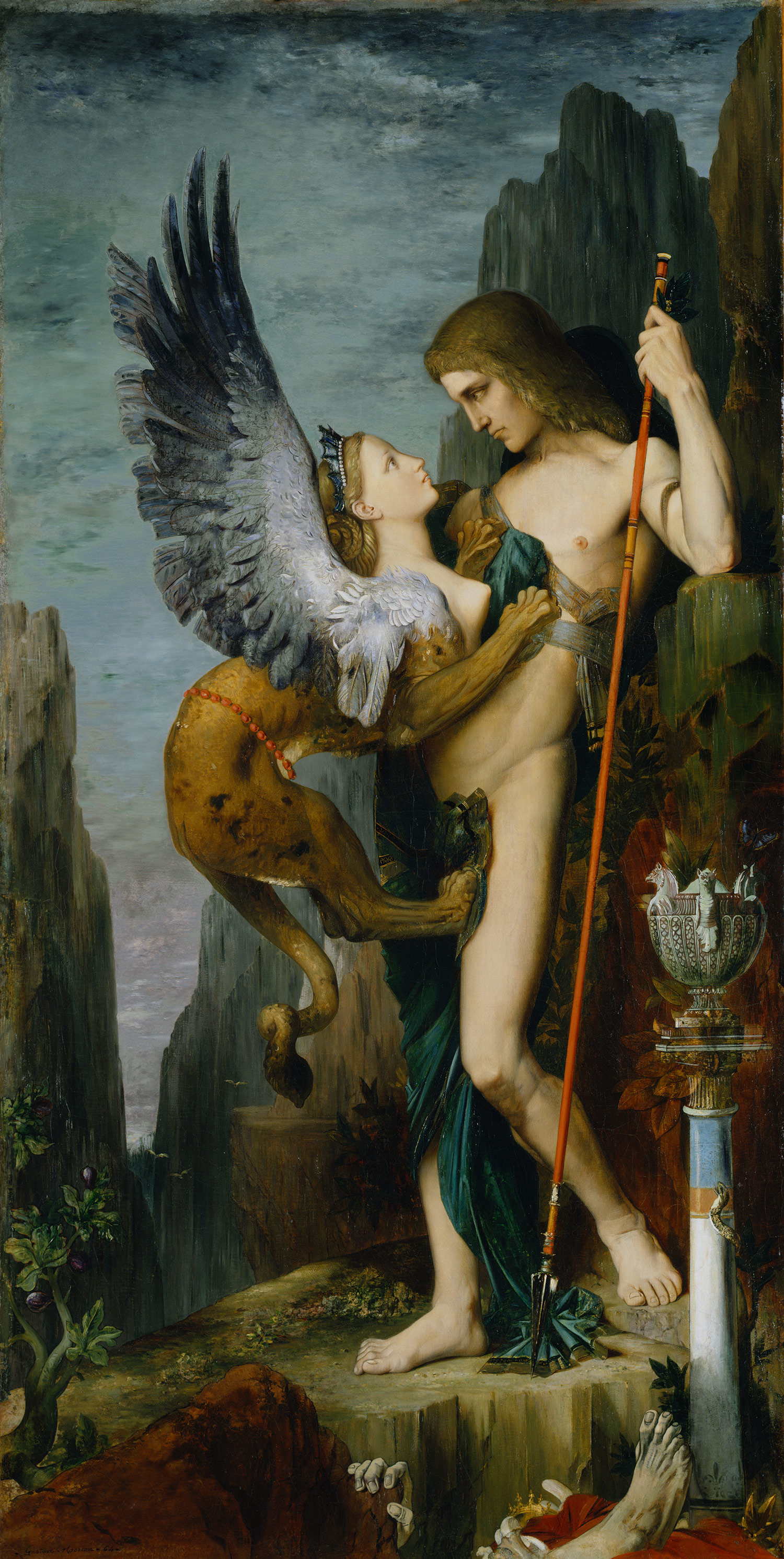
Don't get Des Esseintes started on Gustave Moreau...

p28 caesura |siˈ zh oŏrə; -ˈzoŏrə|
noun
(in Greek and Latin verse) a break between words within a metrical foot.
• (in modern verse) a pause near the middle of a line.
• any interruption or break : an unaccountable caesura: no deaths were reported in the newspapers.
ORIGIN mid 16th cent.: from Latin, from caes- ‘cut, hewn,’ from the verb caedere.

prosody |ˈpräsədē|
noun
the patterns of rhythm and sound used in poetry : the translator is not obliged to reproduce the prosody of the original.
• the theory or study of these patterns, or the rules governing them.
• the patterns of stress and intonation in a language : the salience of prosody in child language acquisition | early English prosodies.

p56 aquarelle |ˌäkwəˈrel; ˌak-|
noun
a style of painting using thin, typically transparent, watercolors.
• a painting in such a style.
ORIGIN mid 19th cent.: from French, from Italian acquarella ‘watercolor,’ diminutive of acqua, from Latin aqua ‘water.’

p75 casuist |ˈka zh oōist|
noun
a person who uses clever but unsound reasoning, esp. in relation to moral questions; a sophist.
• a person who resolves moral problems by the application of theoretical rules to particular instances.

p76 "For several days in succession, his brain was a seething mass of paradoxes and sophisms, a tangle of split hairs, a maze of rules as complicated as the clauses of law, open to every conceivable interpretation and every kind of quibble, and leading up to a system of celestial jurisprudence of positively baroque subtlety."

an illustration by Arthur Zaidenberg from the 1931 Illustrated Editions issue of A Rebours

p94 "... and it is of course true that, just as the loveliest melody in the world becomes unbearably vulgar once the public start humming it and the barrel-organs playing it, so the work of art that appeals to charlatans, endears itself to fools, and is not content ti arouse the enthusiasm of a few connoisseurs, is thereby polluted in the eyes of the initiate and becomes commonplace, almost repulsive."

p110 ritornel/ritornello |ˌritərˈnelō|
noun ( pl. -nellos or -nelli |-ˈnelē|) Music
a short instrumental refrain or interlude in a vocal work.
• a recurring tutti section in a concerto.
ORIGIN Italian, diminutive of ritorno ‘return.’

p118 "Once again, he told himself, the solitude he had longed for so ardently and finally obtained had resulted in appalling unhappiness, while the silence which he had once regarded as well-merited compensation for the nonsense he had listened to for years now weighed unbearably upon him."

p125 trencherwoman/trencherman |ˈtren ch ərmən|
noun ( pl. -men) [usu. with adj. ] humorous
a person who eats in a specified manner, typically heartily : he is a hearty trencherman, as befits a man of his girth.

p141 panegyrist/panegyrize |ˈpanəjəˌrīz|
verb [ trans. ] archaic
speak or write in praise of; eulogize.

p145 purblind |ˈpərˌblīnd|
adjective
having impaired or defective vision.
• figurative slow or unable to understand; dim-witted.

p161 "Yet, the staff of a tavern were every bit as stupid and mercenary, as base and depraved, as the staff of a brothel. Like the latter, they drank without being thirsty, laughed without being amused, drooled over the caresses of the filthiest workman and went for each other hammer and tongs at the slightest provocation."
- I hereby promise to try and start working "go at it hammer and tongs" into conversation

p170 sudorific |ˌsoōdəˈrifik| Medicine
adjective
relating to or causing sweating.
noun
a drug that induces sweating.
ORIGIN early 17th cent.: from modern Latin sudorificus, from Latin sudor ‘sweat.’

p183 hieratic |ˌhī(ə)ˈratik|
adjective
of or concerning priests : he raised both his arms in an outlandish hieratic gesture.
• of or in the ancient Egyptian writing of abridged hieroglyphics used by priests. Compare with demotic .
• of or concerning Egyptian or Greek styles of art adhering to early methods as laid down by religious tradition.

p193 Des Esseintes, while fantasizing about never eating again while receiving all of his nourishment in the form of "peptone enemas", mutters:

"What an absolute release from the boredom that invariably results from the necessarily limited choice of dishes! What a vigorous protest against the vile sin of gluttony! And last but not least, what a slap in the face of Mother Nature, whose monotonous demands would be permanently silenced!"

From Appendix II

p222 alembicated/alembic |əˈlembik|
noun
a distilling apparatus, now obsolete, consisting of a rounded, necked flask and a cap with a long beak for condensing and conveying the products to a receiver.

p223 (from Emile Goudeau's 1884 review of Against Nature):

M. Huysmans, with a remarkable talent and stupefying erudition, has put together in his book Against Nature all the elements of human despair. He has solidly spat on every pleasure, and kept for himself the terrible joy of abolishing human joy. An unhealthy book, but artistically very beautiful, perfectly crafted and skillfully wrought.

Monday, February 11, 2008

Dog Ears #10: Zeroville

Sometimes I hate myself for giving in to the siren song of movies again and again. Part of me thinks that I should know better by now. That I'm looking for something out of films that I can never find again.

Title is taken from Godard's ALPHAVILLE

This nagging gnawing feeling is magnified a thousandfold and distorted into cinematic metafiction in Steve Erickson's Zeroville, a 2007 book that came to my attention from a number of year-end "Best of 2007" lists. The cover art (sucker that I am?) intrigued me even more- why did this bald man have Montgomery Clift and Elizabeth Taylor from A PLACE IN THE SUN tattooed on his head, and what was he gazing at in that empty deep blue space?

Author Erickson is also the film critic for Los Angeles magazine (a good mag that, tellingly, I kept my subscription to during my four years in NYC), and he brings his cynical sense of humor and archivist's passion for films and the film industry to bear on this fictionalized narrative set among "real" Hollywood of the late 1960s, 70s, and early 80s. "Cinéautistic" protag Vikar (the fellow on the cover) either loses or finds his mind with the help of industry friends like John Milius, punk music, and a terrifying recurring dream that doesn't sound all that farfetched to a movie obsessive like me.

Vikar refers to Milius (seen here directing CONAN) as "Viking Man"

The book is frustrating, at times feeling like a self-satisfied collection of obscure film references and trivia held together by the haphazard wanderings of a more-violent Forrest Gump type. But there are stretches where Vikar's quest transcends the limitations of the structure and becomes something unique in its ability to communicate why people who perhaps should know better still look for something (unattainable?) in darkened movie theaters.

p42 "I mean, that's the whole thing about the movies," says the burglar*. "Bigger than the sum of the parts and all that? If the parts are too good, the whole is somehow less. I mean, you can't have, you know, Trane doing the score for Now, Voyager."

* yes, this is the kind of book where burglars wax poetic about the philosophy of cinema.

p119 "When Michael has Fredo killed, it isn't just Cain slaying Abel. It's Abraham sacrificing Isaac, because Michael has assumed the role of the father to his older brother, who has assumed the role of the son. Michael sacrifices the child to the god called Family; he destroys the family in its corruptible human form to preserve the idea of Family that's more divine, and to preserve Michael's love for Family that the older brother has betrayed."

p265 "The thing is, that movie last night* is a completely different movie when you watch it by yourself. Why is that? Movies are supposed to be watched with other people, aren't they? Isn't that the point of movies–you know, one of those social ritual things, with everyone watching? It never occurred to me a movie might be different when you don't watch it with anyone else."

* A PLACE IN THE SUN

p266 "Vikar says, 'Once Cassavetes told me about seeing A Place in the Sun when it came out. He hated it so much that he went back and saw it the next day and then every day for a week, until he realized he loved it. ... So why does that happen?... The movie hasn't changed. It's still the same exact movie, but it's like it sets something in motion, some understanding you didn't know you could understand, it's like a virus that had to get inside you and take hold and maybe you shrug it off–but when you don't, it kills you in a way, not necessarily in a bad way because maybe it kills something that's been holding you down or back, because when you hear a really really great record or see a really great movie, you feel alive in a way you didn't before...'"

Taylor saved a choking Clift's life by pulling two of his teeth out of his throat after he crashed his car in 1956

revolves around Vikar's obsession with two films in particular, George Stevens' A PLACE IN THE SUN (1951) and Carl Theodore Dreyer's THE PASSION OF JOAN OF ARC (1928). Since I hadn't seen either before reading the book, I thought I'd at least check out one and rented A PLACE IN THE SUN. It's not a movie that you can necessarily "enjoy" on a story level, but the technique of the direction, cinematography and editing was certainly far ahead of its time. After seeing PLACE and from what I've gleaned about JOAN OF ARC, I think I understand the connection Vikar felt to these two films in particular. They both feature intimate close-ups that so fill up the screen that the viewer is drawn in deeper than they may be prepared for, and both feature stars (Clift and Maria Falconetti) whose success playing tragic roles on screen somehow translated to lives that became tragedies in reality.

That may be what makes film such a unique medium, not only can it be transcendent and transformative for the audience, but it exerts an even more powerful, and sometimes dangerous, pull on those who create them.


Monday, January 28, 2008

Tunnel Vision

Mrs. Word Player and I took in an afternoon showing of CLOVERFIELD yesterday. Good flick, smartly executed. I actually found myself biting my nails at one point. A lot has been made in the reviews that scenes of destruction in the film echo the footage permanently etched in our minds from 9/11, but I found myself flashing back to my experiences from another traumatic day in New York.

The subway is a very good setting for a monster movie scene...

August 14, 2003. The great Northeast Blackout that knocked out power for 50 million people in the U.S and Canada.

There's a scene in where the survivors decide to flee the streets and walk the darkened, abandoned subway tunnels uptown. Aside from the monster part, I knew exactly how they felt.

By this time MWP and I had moved to Brooklyn, and I'd just landed a job reading scripts for A&E Networks three weeks prior. I got a call from my contact person Mr. RH that he had some scripts for me to pick up, so I hopped on the 4 Express Train at Nevins Street. The evening rush had already begun, and the train became progressively more crowded with sweaty people (the temperature that day was in the low 90s) as we made our way towards my final destination of Grand Central/42nd Street, just a few blocks from A&E's office on 45th.

The train goes express all the way from 14th to 42nd street, so I wasn't quite sure where we were when the train suddenly ground to a halt. At first, nobody batted an eye. Subways make unscheduled stops all the time, usually because another train up ahead is running behind schedule.

But rarely for five minutes. And never for ten minutes. The lights remained on in the car, but the air conditioning did not, and it got very hot very quickly. The conductor soon came over the PA system and told us that the subway system was out of commission, and that they were working on a fix as quickly as possible. People, myself included, were getting antsy. About twenty minutes in, we were told that the entire city was without power. That's when the crying began.

It was like Central Casting had handpicked my fellow mass transiters. A very pregnant woman. Some very old people. About fifteen or twenty 8 to 10-year-old kids, all wearing the same brightly colored t-shirts, on their way to or from camp. I kept waiting for Leslie Nielson to walk into the car and tells us there's no reason to be alarmed. As we were still less than two years removed from 9/11, everyone was speculating about whether the blackout was caused by a terrorist strike. This didn't help the people who were beginning to freak out. I tried to stare straight ahead and be very aware if someone needed my help and/or if someone was going to lose their cool in a violent way (a frequent thought of subway riders even when things are running smoothly).

At some point, the conductor assured us that the blackout was not terror-related and that a crew with flashlights was coming down the tunnel towards us and that we were all going to have to walk through the subway tunnel to Grand Central.

It was the first and only time I've been rescued.

Seventy minutes we were in there.

We were led out the front of the train, where we crawled out one of the front windows, down a ladder and onto the track. We walked single file towards 42nd street from about 37th or 38th. About every 200 yards or so was someone with a flashlight, but other than that it was almost pitch dark.

Yes, you could hear the rats running alongside you. Thankfully, couldn't see 'em. When we made it to 42nd, we were treated to the spectacularly eerie sight of Grand Central Station completely empty, lit by a few emergency lights and, as we walked further out, by the sun coming through the windows. It was one of the most exhilarating feelings I can remember when I finally walked outside onto the street and took a deep gulp of fresh air.

The streets were chaotic with hordes of people walking seemingly in every direction. Nobody's cell phones were working, so after a call to North Carolina on a payphone to let my parents know I was OK and to see if they'd heard from Mrs. Word Player (they hadn't), I decided to walk to MWP's office at 38th and 8th, about six avenue blocks west and four south. When I got there, the buzzers weren't working, so I walked up 15 flights to see if she was still at the office.

Nope, everyone was gone and the doors were locked.

photos ©mrs.word player 2003

Back down the 15 floors, the whole time thinking that the only thing I could do now was not worry about MWP and start walking the 40-50 blocks to the Brooklyn Bridge. My feet hurt and I was drenched in sweat, but by the time I got to the Bridge I started to get a sense of how bizarre this day really was.


it's not every day that cops give out drinks of water

The foot traffic was so thick you could feel the Bridge swaying gently. A look back and you could see the Manhattan skyline in the fading daylight, not a single light on in the thousands of windows. A look ahead and you saw Brooklyn Mayor Marty Markowitz shouting "Welcome Home!" on a bullhorn. Twenty five blocks later and I was home. Thankfully, MWP and her friend and workmate Mz. Art Designer had made it home long before me, snapping the pix I've posted here along the way.

By the next morning, the power was back on, but there was still one more bizarro moment to come. Our good friend Mrs. CFA was working at CNN Headline News back then, and asked Mrs. Word Player to be interviewed live on the air, via telephone, as the pictures she took during the Blackout scrolled across the screen. I sat in the other room, watching the interview live, just one closed door away from the interviewee.

Strange days indeed... most peculiar, mama!