Friday, November 16, 2007

Two is the Magic Number

David Lynch won't leave me alone.
I won't leave David Lynch alone.

I have David Lynch's fax number.
I don't have a fax machine.

is my favorite director, but I rarely watch his films more than two or three times.
I have listened to the soundtrack to TWIN PEAKS: FIRE WALK WITH ME more than any other album, by far.

It's no secret that Lynch explores the theme of duality in most, if not all, of his work. Three of his last four features have dealt with duality explicitly, and its no coincidence that his most famous creation is TWIN PEAKS.

A devoted father... who nonetheless made ERASERHEAD the most unsettling ode to fatherhood in history.

An interesting counterpoint (or, more accurately, accent) to Lynch's apparent fascination with both sides of the coin is that he named his production company Asymmetrical, which, to me, says that he doesn't feel that the two sides in most conflicts are necessarily standing on equal footing.

I've had Lynch on the brain for some time now... pretty much ever since the release nearly a year ago of his last feature INLAND EMPIRE. The other day I forwarded reflections of my second viewing of IE and an interesting psychiatric interpretation of IE to a fellow writer and film lover, and this was his response:

Also, I've been having a great time reading about IE, but the more i
read, the less i think i want to see it. It sounds almost painful.

I simultaneously hear what he's saying 100%, and also am saddened by it. It's not that IE is necessarily "good for you" and therefore should be watched, or even that I necessarily love it the most and want to evangelize it from the rooftops.

It's simply that I was affected by it, and for some reason, want to share that.

I loved his willingness to stump for Laura Dern's IE Oscar chances in untraditional fashion.

I wonder what it means that I am so taken in by tales of madness, murder, paranoia and dissociative personalities. I'd like to believe that it's a sane person recognizing the realities and shades of insanity, but who the hell knows. I DO know that I am plagued by many of the same dualistic fears and insecurities that the characters in Lynch's movies face.

I am a success.
I am a disappointment.

Inherently, I am a good person.
Inherently, I am capable of evil.

I am worldly.
I am naïve.

I am in control of my destiny.
My destiny is in control of me.

I "get" David Lynch's movies.
I "don't get" David Lynch's movies.

etc. etc.

All I know, is that the dark and confusing hallways of Lynch's films also exist inside of me, and that is a good thing, and a bad thing.

Why is it that THESE people still resonate with me where other fictional characters are long forgotten?

A footnote, if you will. Piggybacking on the DVD release of TWIN PEAKS: The Definitive Gold Box Edition is the CD release of TWIN PEAKS: All New Season Two Music. This is truly fantastic news for diehard fans (like myself) of the show's soundtrack music as created by Lynch, composer/musician Angelo Badalamenti, and vocalist Julee Cruise. IMHO, the music from TWIN PEAKS is the most evocative, transporting, emotional, moody, tactile music ever created. Adding something new to the canon of two that has existed with no change for 15 years is extraordinary.

I found a user review on Amazon.com that summarized my excitement for this new release in a way I (or I) couldn't say better myself...

By L. R. Grubb "empathy addict" (Philadelphia, PA USA):

A decade and a half after Twin Peaks ended, six long years since I finished watching the show, and here we are. This is music that I have quite simply been yearning for for years. There is something about Twin Peaks that has created a condensed kind of nostalgia for series itself, the time in my life during which I watched it, and the people I watched it with, as well as something more, an unplaceable, deep and vivid longing for something that does not quite exist. Twin Peaks: Season Two Music has landed softly into my current life, not unlike a telegram from my six-years-ago self, and even with such magnificent tracks like Shelly, Audrey's Prayer, Harold's Theme, Josie and Truman, Hook Rug Dance, and Half Heart, I'm left with the sense of an intangible absence, one I suspect will never be filled after living ever so briefly in the staggeringly multidimensional world of Twin Peaks.

Wednesday, November 14, 2007

Dream Franchise

Moving into a new home means a great deal of new stimuli to absorb, as well as subconsciously letting go of one's previous set of routines and familiar sights. I've found that these sudden shifts almost always cause a sharp increase in my dream activity, that old dream patterns are washed away and a new anthology of motifs and appearances by random faces from the past are featured.

It's not too unlike a new season of original programming after a summer of reruns.

I see horses out my window every day now, and I look forward to seeing them in my dreams

As I've mentioned before, some of my most fertile ideas occur to me in my sleep, as if the writer-side of my brain is trying to send messages to my conscious self that it has something worthwhile. Instead of a ghostwriter... a dreamwriter. Neither one is really you, but both of them quietly fade into the background if they produce something good for you.

Last night I had a doozy of a dream, the kind where you're somewhat aware that you're experiencing a dream but also can't quite shake the feeling that the jeopardy of the dream scenario is very real.

Mrs. Word Player and I had just bought a condo inside a sprawling indoor casino in Las Vegas. Neither of us were excited about the condo, especially because the doors weren't quite attached to the hinges, and the windows kept hovering slightly off the runners they were supposed to be attached to. I kept losing track of where our condo ended and the neighbors' condos began, as the hallways were maze-like and poorly lit. I kept getting frustrated by the lack of boundaries, so I would walk downstairs into the gambling areas, which looked like the interior of an enormous, vaulted-ceiling airport terminal done in tacky Vegas reds and greens.

The hallways in my dream reminded me of the hallways connecting the two realities in LOST HIGHWAY

I kept running into people I knew killing time playing slots or blackjack. I was always surprised to see them, but they were never surprised to see me. Every time I started to gamble, a voice inside my head told me that I only had $100 a day gambling allowance, and not to blow it all too fast.

(It struck my semi-aware conscious self how odd it felt to be privy to the little voice inside the head of my dream self.)

I wandered away from the tables and into a two story saloon-type bar. I emerged on the top floor balcony overlooking the place, and the big crowd down below stopped what they were doing and looked up at me. The only way down to the first floor was a wire that you had to wrap your legs around and shimmy down, pulling yourself with your hands.

I didn't want to go, but the people down below started yelling at me to, and then I realized that a bunch of ruffian types were approaching from behind. I noticed that the floor was covered in shards of brown and green broken glass inches deep. I started making my way down the wire, and everybody on both floors started shouting and breaking chairs and bottles over each other's heads in anticipation of my arrival.

This was terrifying, and I was sure that the mob was going to rip me to shreds when I reached the ground floor. It came as a huge relief to discover that I had entered a theme restaurant where you get to experience a real Western barfight without fear of getting hurt. The glass wasn't real and the chairs were breakaway props. Everybody crowded around me and rubbed my head and good-naturedly punched me in the shoulder in the "we really had you going" way, until we turned out attention to a new guy who'd appeared on the balcony above, and we all started acting crazy and menacing again.

Breakaway glass sure looks like fun.

That was the end of the dream, but it wasn't until a few minutes ago that I thought how cool it would be to have a real cowboy theme bar where you got to participate in a real barfight... something that few of us ever get to (or would want to, in reality) participate in.

In all likelihood the ship-to-shore dream message was something completely different, but that's probably what I'll remember from it.

Sunday, November 11, 2007

Mailer Made

Truth may indeed prove to be stranger than fiction, but why is it that truth and fiction always seem to be the only two choices in the running? It's like only having Democrat or Republican to choose from-- very limiting and tends to shove a lot of gray area into the black.

Truth is stranger than fiction is, I think, a widely held belief by most people of a certain age. I wonder what the margin between them is from person to person? Perhaps I'll start keeping a tab on how many moments from reality jump out as being stranger than any fiction vs those fictional moments that strike me as stranger than reality usually offers.

I wonder if... nahh.

Perhaps not.

A dozen or so days ago I was emailing with a relative of mine, and I half-jokingly replied to something he said with:

As you are almost certainly aware, real life is wildly overrated. I’ve been fictionalizing myself for years and have never been happier.

Actually, I was more than half-joking: just trying to say something cheeky without too much thought about how true it was. But the more I thought of it (and for some reason, I did) the more I felt I'd hit on something relatively unconscious and similarly close to hitting... something.

Perhaps not, but it came to the surface again this morning when I was reading the front page obit of in the NY Times. Mailer joins a long list of iconic artists of whose output I'm still only fleetingly aware... I've read more about him than read him. Anyone interested in getting an excellent look at Mailer the raconteur (and boxing fanatic) should immediately rent Leon Gast's truly excellent 1996 documentary chronicling Ali and Foreman's "Rumble in the Jungle" WHEN WE WERE KINGS. He comes as close as I've ever experienced to transforming boxing into poetry.

Ali Boma Ye! Ali Boma Ye!

Anyway, some pullquotes from Mailer's obit (excellently written by Charles McGrath) really struck me, especially these two:

The beginning of "Armies" is both a good summary of Mr. Mailer's life to that point and an example of how he had begun to turn himself into a character in which literary style and selfhood were virtually indistinguishable.

and this, taken from much later in Mailer's life:

His editor, Jason Epstein, said of this period, "There are two sides to Norman Mailer, and the good side has won."

How much do we actively, consciously pursue a heroic third act in life?

Mailer, it appears, had not only fictionalized his life to a recognizable degree, but also managed to pull off a third act denouement to his personal hero's journey that would have done Joseph Campbell proud: his transformation was not only difficult to predict, but also somehow inevitable.

The real question is...
was it man-writing-with-his-own-life-as-paper-and-typewriter, or did it just happen to turn out that way as most lives unfold... blithely hoping for the best?

Thursday, November 8, 2007

Islands in the Stream of Consciousness

"Sail away with me, to another world..."

In March, some friends turned us on to the late comedian Mitch Hedberg. Following an outdoor afternoon of food and beverage, we piled into the car and listened to some tracks from Hedberg's record MITCH ALL TOGETHER. We loved it- he sounded like a more energized Steven Wright. The high of enjoying new comedy in tight quarters quickly crashed when we were informed that Hedberg was dead (3/29/05, acute toxicity from heroin and cocaine) and left few recordings behind despite a relatively long and successful touring career.

Bummer.

Despite the rock star look, Hedberg suffered from crippling stage fright.

When we got home, I added Hedberg's lone DVD to our Netflix queue and didn't think about him again until a few days ago when it finally made its way to the top and into our mailbox. His comedy didn't have the same impact watching and listening as it did in purely audio state, and part of that was due to how he looked (eerily like a strung-out River Phoenix) combined with knowledge of how he died. Still, the performance really came alive toward the end after he finished his new material and launched into a crowd-pleasing review of more time-tested jokes.

Afterwards, I was surfing around curious to know more about when I came across this doozie of a description at Wikipedia:

His routines featured elocutive but often short, sometimes one-line, observational jokes on everyday life, mixed with absurd and at times hylozoistic and paraprosdokian elements as well as non sequiturs.

I wonder if Hedberg himself would even have been able to easily digest that one! For my and your edification, here's a breakdown of the five dollar words.

elocutive: this word is actually NOT in the dictionary (yet another reminder not to believe everything you read!), but it seems pretty clear that its taken from the word elocution, which means:
1 : a style of speaking especially in public 2 : the art of effective public speaking

absurd: "absurd" is a commonly-used word that most of us use with ease, but I'm a believer in occasionally looking up words you think you know just to make sure, so:
1: ridiculously unreasonable, unsound, or incongruous 2: having no rational or orderly relationship to human life : meaningless ; also : lacking order or value 3: dealing with the absurd or with absurdism

I thought it was interesting that absurd means "no rational or orderly relationship to human life" considering the above description that his humor was largely "observational jokes on everyday life" (and that I personally find at least 51% of human life intensely absurd).

Heraclitus was down with hylozoism.

hylozoistic: taken from hylozoism, which is "a doctrine held especially by early Greek philosophers that all matter has life." Furthermore:

Although there is a distinction between possessing soul (panpsychism) and possessing life (hylozoism), in practice this division is difficult to maintain, because the ancient hylozoists not only regarded the spirits of the material universe and plant world as alive, but also as more or less conscious.

paraprosdokian: a figure of speech in which the latter part of a sentence or phrase is surprising or unexpected in a way that causes the reader or listener to reframe the first part. It is frequently used for humorous or dramatic effect, sometimes producing an anticlimax. For this reason, it is extremely popular among comedians and satirists.

Does it get any better than Rufus T. Firefly?

Here are some good examples of paraprosdokians (say that five times fast)- Hedberg's discovered connection to one of my all time favorite comedians (Groucho Marx) further explains my newfound affinity for him...

Where there's a will, I want to be in it.
"I've had a perfectly wonderful evening, but this wasn't it." — Groucho Marx
"Time flies like an arrow; fruit flies like a banana." — Groucho Marx
"I want to die peacefully in my sleep like my father, not screaming and terrified like his passengers." — Bob Monkhouse
"I haven't slept for ten days, because that would be too long." — Mitch Hedberg

non sequitur: a conversational and literary device, often used for comical purposes (as opposed to its use in formal logic). It is a comment which, due to its lack of meaning relative to the comment it follows, is absurd to the point of being humorous or confusing. Its use can be deliberate or unintentional. Literally, it is Latin for "it does not follow." In other literature, a non sequitur can denote an abrupt, illogical, unexpected or absurd turn of plot or dialogue not normally associated with or appropriate to that preceding it.

Non sequiturs often appear to be disconnected or random comments, or random changes in subject, especially socially inappropriate ones. When non sequiturs are used frequently for comic effect this can be called "absurd humor".

(ah HAH!)

The non sequitur can be understood as the converse of cliché. Traditional comedy and drama can depend on the ritualization and predictability of human emotional experiences, where the theatre of the absurd uses disjunction and unpredictability.

Tuesday, October 30, 2007

Hooper Super

Halloween is nearly here, and I've got the Skittles in me belly to prove it. Last night Mrs. Word Player and I watched our annual scary movie to prep for the big night: 1963's THE HAUNTING.

To me, Russ Tamblyn will always be "Dr. Jacoby"

As you may have noticed, everyone and his brother has a "Top Horror Movies" list going on their site, and Robert Wise's adaptation of Shirley Jackson's 1959 novel "The Haunting of Hill House" made it on most of the lists. Add to that a personal recommendation by a knowledgeable horror movie fan, and it was Netflixed like Chex Mix (The Movie).

Boy, did it feel like a movie from another era. The era where movies didn't have to make sense as long as the production values were up to snuff. THE HAUNTING looked great in sharp Panavision B&W and infrared, and the sprawling gothic manse itself was plenty creepy to serve as the setting for a haunted house chiller.

One one level, it was fun to see a film that, stylistically, inspired future possessed addresses in THE SHINING, THE AMITYVILLE HORROR, and POLTERGEIST. On the other, the movie so unequivocally failed to deliver on its juicy premise and character setups that I felt betrayed and bewildered.

My friends and I saw POLTERGEIST as part of my 11th birthday party. Nice.

Boo.

As the film slowly descended into its arbitrary and vague climax, I started thinking of another Halloween movie night several years ago. We hosted a couple for a double feature at our tiny flat on Horatio Street in NYC. We the gents made two selections we thought couldn't miss- Boris Karloff in THE MUMMY (1932) to be followed by Tobe Hooper's groundbreaking (1974). I had only seen MASSACRE once before, in college late at night in a room full of woozy dudes, and couldn't wait to see it again in a clearer state of mind.

After some wine and grub and MUMMY, we turned the lights off completely and popped in MASSACRE.

Big miscalculation.

Turns out it's not at all geared towards the ladies. What I hadn't remembered is that the second half of the film is basically the terrorized heroine running for her life in the dark with Leatherface and his demented kin nipping at her heels. My friend and I wound up feeling awful for subjecting the ladies to such a grueling viewing experience, but to the girls' credit they watched it to the bitter end.

And then, of course, they let us have it. What kind of assholes would subject their wives to a movie like that?!

This look sums up how the ladies felt about watching TTCSM

I hadn't thought of that night for years until Mrs. Word Player recounted it at a dinner party hosted by another couple here in LA, much to the delight of Host Husband, a horror fan with an encyclopedic enthusiasm for the genre.

As luck would have it, several months later the same Host Husband was picked up by a friend to attend the premiere of his writer friend Dan Madigan's new horror film SEE NO EVIL (2006) starring the hulking wrestler Kane. On their way to the premiere they picked up one more person- MASSACRE director Tobe Hooper. In the car, Host Husband told Hooper the story of how Mrs. Word Player was so shaken up by that long ago Halloween viewing of his film, and he replied that he was genuinely touched that his movie was still able to deliver the goods all these years later.

I gotta tell ya, it felt super cool when Host Husband told me that Tobe Hooper was tickled to hear about Mrs. Word Player's reaction to my disastrous Halloween night movie pick! I knew there was a reason I made it!

Wednesday, October 17, 2007

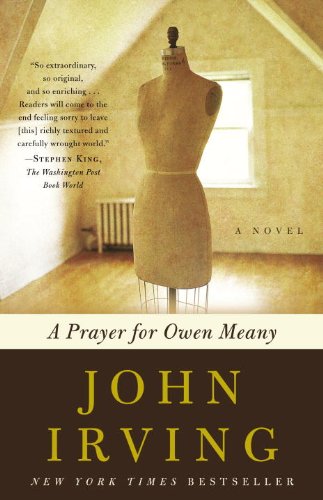
Dog Ears #6: A Prayer for Owen Meany

His vocal chords had not developed fully, or else his voice had been injured by the rock dust of his family's business. Maybe he had larynx damage, or a destroyed trachea; maybe he'd been hit in the throat by a chunk of granite. To be heard at all, Owen had to shout through his nose.

"It is Owen who made me a believer."

So we hear from narrator John Wheelwright on page 3 of John Irving's 1989 novel A Prayer For Owen Meany. So the reader never forgets this unusual method of speaking, John's best friend Owen's dialogue is IN ALL CAPS FOR THE DURATION OF THE BOOK.

At first I found this authorial choice almost too mannered (even for Irving), but the deeper I push into the book (I'm little more than halfway through on p.350) the more I recognize that it's pivotal to never forget Owen's physical peculiarities as the mystery of his "purpose" is slowly revealed to us through the narrative.

I admit the book has been slow going the last 100 pages or so, but the book's reputation as a classic and my faith that Irving is building to some wonderful fireworks in the Third Act are keeping me going.

That, and the beautiful writing of course.

I'm nervous about how Vietnam will figure into the story of Owen and John

Before I get to some of the many, many dog ears from the first half, I'm wondering if anyone else has noticed a great deal of similarities between Owen Meany and Max Fischer from Wes Anderson's RUSHMORE (1998). I'll have to watch the film again after I finish the book, but off the top of my head Owen and Max both:

1. attend a tony private all-boys school, but only with financial assistance
2. become enraged when Latin is removed from the curriculum
3. suffer from delusions of grandeur
4. feud with the school's headmaster
5. are the central figure at the school's newspaper
6. are central figures in local/school productions of dramatic plays

and I'm sure there are more. I'm also curious to know if the book's quasi-official film adaptation SIMON BIRCH (also 1998) is worth watching. Apparently, John Irving sold the film rights, but only with the stipulation that the title never be used. Irving himself came up with Owen's replacement name "Simon Birch."

Weird.

OK, on with the prose.

p.7 "–but every study of the gods, of everyone's gods, is a revelation of vengeance toward the innocent."

p.34 "Your memory is a monster; you forget–it doesn't. It simply files things away. It keeps things for you, or hides things from you–and summons them to your recall with a will of its own. You think you have a memory; but it has you!"

p.38 "And in addition to being an almost perfect mother, I also know that she was a happy woman–and a truly happy woman drives some men and almost every other woman absolutely crazy."

p.57 "It's a no-win argument–that business of what we're born with and what our environment does to us. And it's a boring argument, because it simplifies the mysteries that attend our birth and our growth."

p.83 red-letter: of special significance
Function: adjective
Etymology: from the practice of marking holy days in red letters in church calendars
Date: 1704

December is chock full of red-letter days

p.111 "... Mr. Merrill was the most appealing because he reassured us that doubt was the essence of faith, and not faith's opposite."

p.128 "Mrs. Hoyt was the first person I remember who said that to criticize a specific American president was not anti-American; that to criticize a specific American policy was not antipatriotic; and that to disapprove of our involvement in a particular war against the communists was not the same as taking the communists' side. But these distinctions were lost on most of the citizens of Gravesend; they are lost on many of my former fellow Americans today."

p.292 "And Hester was committed to irreverence..."
(what an outstanding commitment! Hester the Molester, I salute you!)

p.309 "Don't ask for proof–that was Mr. Merrill's routine message.
'BUT EVERYBODY NEEDS A LITTLE PROOF,' said Owen Meany.
'Faith itself is a miracle, Owen,' said Pastor Merrill. 'The first miracle that I believe in is my own faith itself.'"

p341 "'IT JUST TAKES A LITTLE MORE FAITH.'
'It takes more practice,' I told him irritably.
'FAITH TAKES PRACTICE,' said Owen Meany.

Monday, October 15, 2007

Prevorce?

The October 14 New York Times Magazine featured an extensive series of articles and polls that took a close look at what wealth means to the city's over 8 million residents. As a former, briefly-tenured, New Yorker my favorite stat was that only 51% of those polled "think that living in New York City is worth what it costs."

You only find out about the five months of winter AFTER you move there

Since I moved away from NYC, I've had to field many questions as to why I wanted to leave. My favorite answer is "New York is a city designed for the very young or the very wealthy, and by the time we left Mrs. Word Player and I were neither."

According to Mercer's 2007 Worldwide Cost of Living Survey, NYC is the most expensive city in North America (and 15th in the world- shockingly, Moscow edged London for the top spot). I remember a NYTimes article from a few years ago that really took the wind out my sails about NY. It's premise was basically that a married couple with two kids and an annual household income of $1 million could only break even living in Manhattan.

Depressing, no? In 2001, we paid $2000 a month for a 450 sq.ft. apartment in Manhattan... I shudder to think what it's going for now.

Anyway, this Sunday's Magazine had an article on the "superspecialized workers who serve the supperrich" of NYC, such as nannies, party planners, etc. One guy's profession in particular caught my eye- William D. Zabel, Postnup Lawyer.

If you're a "nonmoneyed spouse", this man is the Angel of Death

"What the hell is a postnup?!" I wondered. Here's the blurb from the magazine:

“Postnups” — or postnuptial agreements — “are usually for couples without prenups,” says Zabel, a trusts and estates lawyer with Schulte, Roth & Zabel. Why people get postnups: “Either the nonmoneyed spouse — usually the wife — in a 30-to-40-year marriage wants to know what she’s worth and gain some financial security, or the moneyed spouse in a newer relationship — usually the husband, and these days, often a young hedge-fund manager — wants to see if the wife is in it for the money and wants to cap the assets paid out if the marriage were to end in divorce.” Do his postnup negotiations ever lead to divorce? They usually help a marriage, because “everybody knows where they stand.”

Although I'd never heard of such a thing, my gut was in instant disagreement with Zabel's assertion that postnups usually help a marriage. After discovering that "postnuptial agreement" isn't even in the dictionary (though "prenuptial agreement" is), I poked around a little more and found a Time article from 2001 that made more sense to me.

After shocking me (I'm easily shockable these days apparently) with the stat that 20% of newly married couples get prenups, the article lists other reasons that couples get a postnup, including dramatic changes in finances from an inheritance, protection from liabilities one of the spouses may be experiencing in business, and controlling inheritance paths in blended families.

Blake Edwards' films contained hilarious/terrifying perspectives of marriage

I am a happily married man, and admittedly naïve when it comes to marital ruthlessness , but I have been around the block enough to understand (to a certain degree, anyway) why a party with a sizeable amount of wealth wants to protect themselves from someone entering into marriage under false pretenses.

What I don't understand is how any spouse could feel anything but impending doom if, after their marriage partner inherited a big chunk of change, called in the lawyers to cap how much they could get in the event of a divorce. Wouldn't that signal something awful on the horizon if it happened to you? Or am I just being Mr. Sensitive Guy?

Saturday, October 13, 2007

Use Your Reimagination

I'm sure by now everyone has noticed this, but the taglines for two miserable-looking comedies out now are almost exactly alike. The curiously ubiquitous Dane Cook's GOOD LUCK CHUCK's tagline is "Sometimes, Love Blows" while "Love Blows" sells us THE HEARTBREAK KID, Ben Stiller's ill-conceived remake of the 1972 Charles Grodin vehicle.

Nobody can curl a lip like Grodin

How unimaginative, right?

Perhaps, when they're remade in the future, someone will "reimagine" the taglines too.

Hollywood has apparently become dissatisfied with the term "remake", because lately I've been reading that films like Rob Zombie's 2007 HALLOWEEN aren't remakes, but "reimaginings" of the source material.

From Wikipedia:

Recently, the term "reimagining" has become popular to describe remakes that do not closely follow the original. The term is used by creators in the marketing of films and television shows to inform audiences that the new product is not the same as the old.

But how close is "closely"? Is there a definitive dividing line that separates the mere remake from the far more grandiose-sounding reimagining?

I've been plagued by/secretly enjoying nightmares "adapted from" John Carpenter's HALLOWEEN my entire adult life

First we have to sort the "reinterpretations" out of the equation. BATMAN BEGINS (2005) is not a remake of nor a sequel to BATMAN (1989), but rather a reinterpertation of the same DC comic book source material that inspired BATMAN the movie and BATMAN the 1960's TV series. So, then, it would seem that BATMAN BEGINS (and its 2008 sequel THE DARK KNIGHT) are technically "readaptations", right?

Who the hell knows. It just seems depressing to me that rather than fostering new ideas, we're doomed to a neverending cycle of cannibalism and reheating of leftovers. The Wikipedia section listing film remakes is so long that it has to be broken up into two sections: A-M and N-Z.

Back to reimagining. All of the film and TV franchises that have been deemed reimaginings are in the horror and sci-fi genre: TEXAS CHAINSAW MASSACRE (1974 & 2003), BATTLESTAR GALACTICA (1978 & 2003), DAWN OF THE DEAD (1978 & 2004), BIONIC WOMAN (1976-2007), etc.

I wonder why that is? Why is Michael Bay, who as producer has already re-somethinged the AMITYVILLE HORROR, THE HITCHER and TEXAS CHAINSAW MASSACRE franchises, now turning his attention to FRIDAY THE 13th?

It's hard to believe FRIDAY THE 13TH: THE FINAL CHAPTER was 23 years ago...

Because IT'S EASY! Is there anything more American than following the path of least resistance to the pot of gold? These films and franchises have brand equity and name value, so it doesn't really MATTER how wildly they're reimagined or bastardized... basically the same format and structure are gonna unfold whether or not it's a no-name low-budg horror film or it's a big-budg "Rising/Birth of" chapter or a THEORETICALLY daring shift of location or temporal setting (JASON GOES TO HELL and/or MANHATTAN, Aliens fight Predators, etc).

A large group of teens/scientists/mercenaries are gonna be whittled down by the killer, at least one in a sexually compromising position, until a final showdown where the killer is vanquished... or is/are they?

Repeat as necessary.

Thursday, October 4, 2007

The Colossus of Rhoda

For a long time, my job entailed reading screenplays that had been submitted to various film and TV production entities. During that decade I began paying a different kind of attention to the movies and TV shows I saw for pleasure and for work, trying to keep track of successful and unsuccessful screenplay structural trends. I continued studying structure (among other things) during a two year screenwriting program in NYC, where I applied what I'd learned from the thousands of scripts I'd read and tens of thousands of films and shows I'd seen to scripts I was now writing.

During this process, one of, if not the most important aspects of dynamic storytelling that was elevated from instinctual and/or unspoken to conscious, front-of-the-brain awareness was the pivotal role of the primary supporting character as it relates to the lead or "hero" character.

no word yet on whether the Bronx has a Rhoda statue in the works

I figured out that every good hero's journey requires a best friend or sidekick. Unlike novels, film and TV characters have little or no "internal" life (barring the novelistic cheat of constant voice-over narration), so for the audience to understand what the hero character is experiencing we need a character to stand in for us and listen to/experience along with the trials and tribulations of the lead as they attempt to conquer the villain/opposing force that stand in their way.

In other words, Mary Richards needs Rhoda Morgenstern to succeed. Speaking strictly for TV and excluding movie characters, I'm pretty sure that Rhoda was the best "best friend" character in television history.

I grew up watching THE MARY TYLER MOORE SHOW because it was one of my mom's favorites and at that time there was only one set in the house so the kids watched whatever was on. I hadn't thought of MTM much since my 1970s childhood until a recent foray into EVERYONE LOVES RAYMOND. During its first run, I avoided RAYMOND, believing it to be just another lowbrow comedian huckstering "isn't middle class American hilarious?" schtick. By the time it settled into reruns, Mrs. Word Player and I had heard enough positives about it to give it a try so we dutifully set the DVR to "record series" and were pleasantly surprised.

Although we both HATED Chris Elliot's "Peter MacDougall" character (the brother of Ray's brother Robert's girlfriend/wife Amy), we loved Amy's parents, played by Fred Willard and Georgia Engal. Despite the nearly 30 year gap since watching my last MTM episode, the first time Georgia Engal's "Pat MacDougall" appeared onscreen I blurted out "That's Ted Baxter's girlfriend!"

Long story short, Mrs. Word Player hadn't seen a single MARY TYLER MOORE SHOW, so we harnessed the awesome power of Netflix and began watching them in chronological order, starting with the first episode of Season 1, first broadcast September 19, 1970.

And we laughed and had ourselves a "new" show just like that.

will Netflixing RHODA be wonderful or sad???

We're now approaching the end of Season 3, and in two recent episodes it's been teased that Rhoda might be leaving Minneapolis. Thankfully the third act of each had Rhoda firmly back in her bachelorette apartment above Mary's, but the specter of Valerie Harper's Rhoda character being spun-off into her own show (we know it happens, but not exactly when) has me pondering just how important she is to the show.

The answer, or course, is very. MTM has aged remarkably well, thanks in large part to the incredible ensemble cast of character actors assembled by co-creator and legend James "Hell" Brooks. Judge Smails and Captain Steubing in the same show? Oh HELL yeah.

it's no coincidence that his dog was named "Baxter"

Thanks to terrific writing and acting the character of Rhoda, Mary's best friend and confidante, is the one that holds Mary's hilarious and quite frequently touching single-gal odyssey through the 70s together.

And for that, I salute you. People often argue about who's "the Mary" and who's "the Rhoda" in a friendship, each one usually believing that they are the Mary. I personally am more comfortable as a Rhoda.

Sunday, September 30, 2007

Promises of the Flesh

Something I've shied away from in this forum is the straight-up review. Reviews are a dime a dozen (probably cheaper than that in this age of blog-bling), and until the dawn of consensus critical sources like Metacritic and Rotten Tomatoes, there was no way of telling whether a review was "right" or "wrong".

Which brings up the question of whether or not a review can be right or wrong for more than one individual at a time. If so, perhaps only in the cases where the review reader sought out the subject of a review and compared notes.. which we don't often do for things reviewed in a harsh negative light.

Viggo knows how to deliver a message.

A while back I came up with a gimmicky approach to the movie review that I thought might be fun. The idea is that one man's trash is another man's treasure, so why not write reviews from the pseudonymous personality of someone hardwired to love the movie in question. Every review would more or less be a rave, but regular readers of the column would get an insight into what they could expect from the movie by which personality was reviewing it and how it rated for the kind of reviewer who, in theory, is predisposed to loving it.

Isn't it unfair to the moviegoer to have the same guy reviewing MR. WOODCOCK and EASTERN PROMISES?

Ultimately it sounded like too much work for a lark, but maybe one day...

My aside aside, I just returned home from director David Cronenberg's latest film EASTERN PROMISES, which is hands down the best movie I've seen all year. Rather than write review-type stuff about it I wanted to jot down some comparisons of my experience today to the one I had watching Cronenberg's last film, also starring , A HISTORY OF VIOLENCE.

As great a time at the movies as I had today, I had the opposite watching HISTORY. I thought then that Cronenberg had officially lost his touch (SPIDER was thoroughly unwatchable) after a two-decade run as one of the most exciting directors in the business.

Twins... how many of us have them?

As sure-handed as PROMISES felt, HISTORY felt scatterbrained. As sharply-directed and "in the pocket" as the actors felt today, they felt attention-starved and mismatched in HISTORY. William Hurt was Oscar-nominated for his laughable, scenery-gorging, late-period Brandoesque supporting role in HISTORY: Mortensen will be nominated for his elite, coiled, hypnotic leading work in PROMISES.

As piecemeal and wildly uneven in tone as HISTORY felt, PROMISES felt like a seamless fabric of writer, director and cast working in unison.

I haven't felt that good watching a movie in the theater in a long, long time. How you feel about a movie doesn't necessarily say that much about the movie itself, even if you're a top flight film critic, but nonetheless what I felt as I was watching EASTERN PROMISES (including the relief of seeing a cinematic hero return to form) was so good I felt compelled to share it.


This still from Cronenberg's RABID has always freaked me out.

"You need language for thought. And you need language to anticipate death. There is no abstract thought without language. And no anticipation. I think the anticipation of death without language would be impossible."
- David Cronenberg

"My dentist said to me the other day: I've enough problems in my life, so why should I see your films?"
- David Cronenberg

Thursday, September 27, 2007

Down Peripatetiscope

Mrs. Word Player and I are on the move.

Again.

For reasons too tedious to include here, we are about to move into our sixth place together spanning our seven years of marriage. With yet another new home looming, I've been pondering just what "home" means anymore.

There's no place like home? Well, not 'til one falls on your sister's head.

Some personal statistics:

From age 0-17, I lived in six different homes, including three interstate moves. The math is pretty easy here, averaging about one home every three years.

From age 18-27, I lived in ten different homes, including three more interstate moves. That's an average of one new home every year for a decade.

From age 28-36, as mentioned above, Mrs. Word Player and I lived/will live in six different homes, including two more interstate moves. That works out to a new home every 1.5 years.

My grand totals fo' life are 22 different homes in 36 years, or one move every 1.63 years and one interstate move every 4.5 years.

Exhausting I tells ya!

Frankly I'm not ready to be on the road again... but whattaya gonna do?

It's gotten to the point that when someone asks me where I'm from, I have to stop and think about it for a second. Let's see what state takes home the title (rounding off to whole years):

Ohio: 10 years
North Carolina: 13 years
California: 9 years
New York: 4 years

ah, the Sunshine State!

I guess I'm from North Carolina!

In surfing around for this post, I learned that a fellow named John Howard Payne is the originator of the famous line "Be it ever so humble, there's no place like home", taken from his song "Home Sweet Home". Payne, a member of the Songwriters Hall of Fame, ironically died far from home in Tunis, Tunisia (where he was serving as U.S. ambassador!) in 1852, his lifelong crush on Frankenstein author Mary Shelley forever unrequited.

I wonder where on Earth I'll die... I hope it's not New Jersey.

Sunday, September 23, 2007

It Blows By Any Other Name?

Who's ready to get unscientific?!? Good, me too.

I've been seeing ads lately for IN THE VALLEY OF ELAH, the latest surefire post-MONSTER flop from Academy Award® Winner . I have no idea what the movie is about, but every time I see an ad for it I cringe at how awful the title is. With a title like that it HAS to be a flop, right?

Well, I think so.

The flag in the background counteracts the foreign-sounding word in the title

The first movie title that I can remember having this same effect on me was KRIPPENDORF'S TRIBE. I remember seeing the trailer for it and whispering to whoever it was next to me "Can you imagine ever speaking the words "'two for KRIPPENDORF'S TRIBE please'"? Unfortunately I can't immediately find the budget for KRIPPENDORF'S, but with a U.S. gross of $7.6 million for a Disney movie starring Richard Dreyfuss and Jenna Elfman, I can safely call it a flop.

I thought it would be fun to look back at the titles of the 3,296 films that have been/will be released from January 1, 2003 to December 31, 2007 and pick out the the titles that I hated strictly on their own merit. These are titles that made me cringe so viscerally that they actively made me NOT want to see the film they represented.

it just can't be a good idea to have "VERY LONG" in your movie's title

I came up with 20 films in all, and AFTER I selected them by title, I looked up their budgets and their box office performance in the U.S. Let's see how good a prognosticator I would have been if betting by title alone.

2003

THE LIFE OF DAVID GALE: budget- $50 million, U.S. gross- $19.7 million
POOLHALL JUNKIES: b. $4 mil, USg. $.56 mil
OWNING MAHOWNY: b. $10 mil, USg. $1 mil


2004

CHASING LIBERTY: b. $23 mil, USg. $12.2 mil
WELCOME TO MOOSEPORT: b. $26 mil, USg. $14.5 mil
THE UNITED STATES OF LELAND: b. ??, USg. $.34 mil
THE CHRONICLES OF RIDDICK: b.$120 mil, USg. $57.7 mil
A HOME AT THE END OF THE WORLD: b. $6.5 mil, USg. $1 mil
SKY CAPTAIN AND THE WORLD OF TOMORROW: b. $70 mil, USg. $37.8
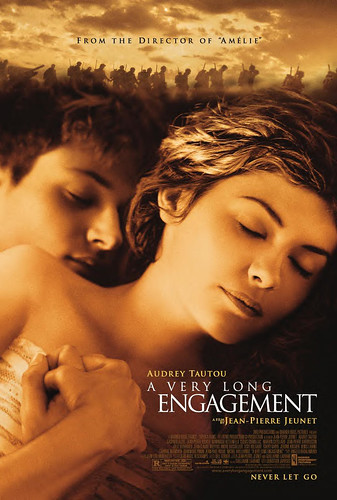
A VERY LONG ENGAGEMENT: b.$55 mil, USg. $6.2 mil


2005

BECAUSE OF WINN-DIXIE: b. $15 million, USg. $32.6
ELIZABETHTOWN: b.$54 million, USg. $26.9


2006

LOOKING FOR COMEDY IN THE MUSLIM WORLD: b. ???, USg. $.89 mil
TRISTRAM SHANDY: A COCK AND BULL STORY: b. $4.7 mil, USg. $1.2
LUCKY NUMBER SLEVIN: b. $27 mil, USg. $22.5
LET’S GO TO PRISON: b. $4 mil, USg. $5.5 million


2007

CODE NAME: THE CLEANER: b. $20 mil, USg. $8.1 mil
I THINK I LOVE MY WIFE: b. $14 mil, USg. $12.5
THE WENDELL BAKER STORY: b. $8 mil, USg. $.13 mil
IN THE VALLEY OF ELAH: b. ??? USg. ???

Slevin? no really, Slevin??

So, without using LELAND and ELAH and MUSLIM in the equation (for lack of available figures) lets see what the numbers add up to for the other 17 films on Mr. Word Player's Terrible Title List™.

COMBINED BUDGET: $511.2 million
COMBINED GROSS: $260.1 million

COMBINED LOSS: $251.1 million

Now here's the question that I have no answer for-- with better titles, would these films have performed appreciably better? Or are titles such an integral part of a film that these were doomed to (collective) box-office failure, having been developed and rewritten for so long with weak titles at the eye of the storm?

I haven't seen any of the movies on the list (with the exception of the first 20 minutes of TRISTRAM), so I can't really comment on how their quality/perceived quality figured into the losses.

What do you think? What IS in a name when it comes to plunking down your hard earned entertainment dollar?

Thursday, September 20, 2007

Blue on Blue

Lately, for a variety of reasons, I've been using more profanity than usual. Just today a minor curse word escaped my lips in conversation with a woman I'd just met, and in a business scenario. She didn't blink at it and we moved on, but inside I was peeved.

Come on Mr. Word Player, you're better than that.

And as I'm sure you know, I'm not the only one. America is cursing up an unprecedented blue streak with no signs of a slowdown, let alone a return to more genteel public discourse.

All of this shit-talking got me wondering a while back how the word "blue" got associated with profanity and risqué business. Mrs. Word Player found an interesting post about it on Snopes.com, where they dispelled the urban myth that American "blue laws" were so-called because they were printed on blue paper.

Picasso's "Blue Period" was fucking awesome

Apparently our 17th century Puritan forefathers and -mothers enacted a series of "blue laws" that regulated people's "moral behavior", especially as concerning the Sabbath day. Variances of these sorts of laws evolved into the 19th and 20th century temperance movements and to some degree explain why you can't buy booze until such-and-such o'clock on Sundays in so many states.

You get an interesting dichotomy of meaning when you look up the word blue, as seen by these two side-by-side definitions found at Merriam Webster's site:

6 : PURITANICAL
7 a : PROFANE, INDECENT b : OFF-COLOR, RISQUE


Huh. Blue means puritanical AND profane (not to mention "low in spirits").

Look it up at the Online Etymology Dictionary, and all you get is:

Blue (adj.) "lewd" is recorded from 1840; the sense connection is unclear, and is opposite to that in blue laws (q.v.)

Pornographic films used to be called "blue movies."

The most popular color for toothbrushes is blue (which is helpful for when you're washing your mouth out after using blue language.)

Warhol's "Blue Period" was less awesome...

And then there's the term "working blue" and/or "blue comedy", which would appear to come from the same (blue?) vein. Mrs. Word Player and I joke with one another about how we love it when the other is working blue (the comment that usually follows an unexpected or particularly filthy outburst of obscenity.

My good friends at Wikipedia had this interesting info about blue comedy:

Blue comedy is comedy that is off-color, risqué, indecent, profane, or obscene[1]. It often contains cursing and/or sexual imagery that shocks and offends many audiences.

The term comes from the music hall comedian Max Miller who kept all his adult jokes in a blue coloured notebook. 'Working blue' refers to the act of performing this type of material.


one can only imagine Mary's X-rated activities

Wow. Can it really be true that "blue comedy" would have been called "orange comedy" if Max Miller had bought a different style of notebook?

I have a faint memory of the first time I heard a reference to blue comedy, naturally attached to the colorful Redd Foxx. I imagine we'll all be cursing a blue streak when the ill-advised feature film adaptation SANFORD AND SON comes to a theater near us.

Under certain circumstances, profanity provides a relief denied even to prayer.
–Mark Twain (1835-1910)

Tuesday, September 18, 2007

Cellular Phronesis

Someone or other once said that "a clear conscience is often a sign of a bad memory." I wonder what that means for the consciences of the near future that will no longer be able to forget a thing with every step of every day recorded in one form or another for later playback or review.

Memory, of course, is a very tricky thing, and I for one am pleased with the way technology allows us to remember things that were prime candidates for slipping through cracks. It has taken me some effort to memorize three phone numbers that I can recite without cheating, yet I can vividly remember the first time I heard Heart's "Magic Man" on the way to Montessori school about 32 years ago and being scared and excited by the lyrics coming out of Mother Word Player's dashboard FM.

terrifying!

I got to thinking of the shortcomings and successes of memory on Sunday reading Jenny Lyn Bader's article "Britney? That's All She Rote" from the Week In Review section of the New York Times. Bader touched on something I've felt for a long time now, that collectively our memories are getting to be just as short as out attention spans. "We are in a culture that devalues our sense of memory" says author and Harvard rhetoric professor James Engell.

I've hoped that the less we have to rely on our memories for day-to-day details (thanks to advances in personal technology) that the more brainpower we would have at our disposal for creative and esoteric thinking. Frankly, it's hard to compare one's memory epochs, especially when you can't remember what the older ones were like anymore.

people often forget about The Disintegration of The Persistence of Memory

The article contained two words I was unfamiliar with that I wanted to write up here, but in the 48+ hours since I first read it something else from it has lodged in my noggin. In talking about the physiology of memory, she notes:

Other body parts may be involved, too, as suggested by stories of transplant patients who acquire memories not their own. Mr. Engall said, "Memory has a kind of bodily presence."

And I thought that notion was strictly the invention of horror screenwriters!

Anyway, here are the two words that are either new to me, or seemed so because I had forgotten learning about them the first time:

1. phronesis: Aristotle distinguishes between two intellectual virtues: sophia and phronesis. Sophia (usually translated "wisdom") is the ability to think well about the nature of the world, and is used in our attempts to discover why the world is the way it is (this is sometimes equated with science); sophia involves deliberation concerning universal truths. Phronesis is the ability to think about how and why we should act in order to change things, and especially to change our lives for the better. Aristotle says that phronesis isn't simply a skill, however, as it involves not only the ability to decide how to achieve a certain end, but also the ability to reflect upon and determine that end (this is, however, denied by some commentators, who argue that Aristotle considers the desired end (eudaimonia) to be given, so that phronesis is simply the ability to achieve that end).

perhaps Aristotle taught Alexander a tad too well?

Gaining phronesis requires time, as one must gain both the habit and understanding of correct deliberation.
(
definition taken from wikipedia)

2. neurobics: a unique new system of brain exercises based on the latest scientific research from leading neurobiology labs around the world - including Dr. Katz' lab at the Dept of Neurobiology in the Dook University Medical Center in Durham, NC. The deceptively simple exercise program is the first and only program scientifically based on the brain's ability to produce natural growth factors called neurotrophins that help fight off the effects of mental aging. Neurobic exercises use your five physical senses and your emotional sense in unexpected ways and encourage you to shake up your everyday routines.
(explanation taken from neurobics.com)

Tuesday, September 11, 2007

In Search Of: Optimism

Six years ago today, a phone call woke me up for the second time that morning. The first time was when Mrs. Word Player got up to go to work, after which I promptly fell back asleep. The phone call was from a close friend who worked at CNN Headline News in Atlanta. She told me that a plane had struck the World Trade Center, that it was apparently no accident, and was asking if we were OK.

By the time I got dressed and ran up to the roof to see, a second plane had struck the towers. Words cannot describe the feeling of shock, how time seemed to slow down, and how scared I was. Mrs. Word Player called from work, and soon would return to our tiny West Village apartment with several of her workmates in tow. We numbly watched the news coverage, drank scotch, and made and fielded phone calls checking on friends and loved ones.

taken from our rooftop at 14 Horatio St. on my 30th birthday, 8/24/01

The acrid smell of smoke and scorched metal would waft up to us later that morning and linger for weeks.

taken from the same rooftop 18 days later

And of course, all of our memories of that morning will linger for the rest our lives. I'm a big fan of milestones and statistics, eras and epochs, and as I've been thinking about today's sixth anniversary of 9/11/01 I've thought about how it demarcated my own life.

From 8/24/71 to 1/28/86 I was an optimist. Until my gym class that day, freshman year of high school, when we were called back to our class and informed that the Space Shuttle Challenger had disintegrated shortly after liftoff, I had no question that the future would be even brighter than I could imagine (and to paraphrase Han Solo, I had imagined quite a bit). I was a sci-fi kid, and I was certain that in my lifetime I'd be visiting Space Stations and Moon Bases. SPACE: 1999 and The Martian Chronicles had been huge favorites of mine, and they weren't set so far into the future that I couldn't believe.

Anyway, from 1/28/86 to 9/11/01 I was a realist, with cynical tendencies. After 9/11, I began skewing more and more pessimist. No need to go into detail, but suffice it to say that I no longer saw a bright future for the people of Earth.

But wait, there's more?

NYC-based artist and graphic designer Reed Seifer (pronounced like "cipher") created his Project Optimism long before 9/11/01, but for me it has taken on a special personal meaning in the months and years since then. He has incorporated the word and the spirit of "optimism" into a variety of media and format, but the one that I thankfully can't seem to stop thinking about is his series of brightly colored buttons with the single word "optimism" emblazoned on them.

optimism!

Life can appear cripplingly complicated to me at times, and the fact that a simple button with one word on it can be so powerfully affecting comes as a great relief.

The Optimism of childhood was a gift, but I've come to realize that the Optimism of adulthood is a choice. It's not whether you see the glass as half full or half empty, it's how hard you work to add just enough to the glass that it's no longer a judgment call.

Thursday, September 6, 2007

Cruising World

In the U.S., English is the native tongue spoken by approximately 82% of the population, and over 140 languages are taught in high schools across the nation in a vain attempt to make Americans bilingual.

Why is it then, I wonder, that it seems like everybody took either Spanish or French in high school?

I'll never forget this poster of Gerard Depardieu that hung above the blackboard

I took French for three years and Latin my senior year (in which I earned my first "F", thankfully after I'd already been admitted to UNC-CH). With some scattered French in middle school and an additional year in college, I learned enough French to order food on a train and ask directions.

But most importantly, to me anyway, I learned enough to speak English with an exaggerated French accent for laughs and to pepper my snappy comebacks with just enough French snippets to sound arrogant at the proper time.

I've come across a couple of unfamiliar French words in articles over the past few days, which made me think of some of my favorite phrases from Madame Rothe's French class in high school that survived my teens and live on to this day:

"passez une bon weekend"= have a good weekend

"qu'est-ce que si passe?" = what's going on? what's happening"

"porquoi? PARCE-QUE!" = why? BECAUSE!

I can safely say this now, nearly 20 years later, without fear of getting Madame Rothe in trouble: she invited some of her favorite students over to her house and GAVE US ALL A GLASS OF WINE as we hung out and talked about France.

Can you IMAGINE such an egregious violation of teacher-student conduct? And at a CATHOLIC school no less!

"French for Robots" is the hot new elective for Fall '07

Madame Rothe was a great teacher- one of the very few from my K-12 years that I ever think about anymore.

Anyway (before I bust out cryin') here are the two Frenchyisms I had to look up earlier this week:

maudit: Definition: (informal adj) - darned, blasted, hateful

Où sont ces maudites clés ? - Where are those darned keys?

Après ce cours, je ne veux plus voir ce maudit livre - After this class, I don't want to see this hateful book any more

(literary adj) - accursed

Related: maudire - to curse; un/e maudit/e - damned soul; le Maudit - the Devil
(thank you french.about.com)

Al apparently prefers Cruis'n Exotica

The word was used in an Indiewire article about the DVD release of the much maligned Al Pacino gay serial killer thriller CRUISING, as follows:

"Paramount's imminent deluxe edition of William Friedkin's 1980 film maudit, CRUISING."

The second was folie à deux, which means "shared madness" or "craziness for two", a mental disorder which occurs simultaneously in two people with a close relationship or association.

This one I read in Newsweek's article about the back-to-back suicides of former "it"couple Theresa Duncan and Jeremy Blake.

Moments tristes...